
Hey there! As a supplier of large UV printers, I often get asked a bunch of questions from customers. One question that pops up quite a bit is, "Can a large UV printer print on mirror surfaces?" Well, let's dig into this topic and find out.
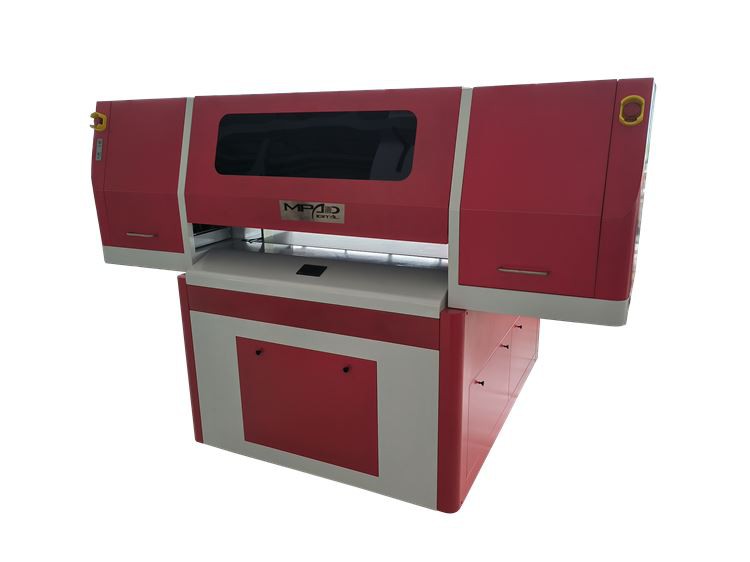
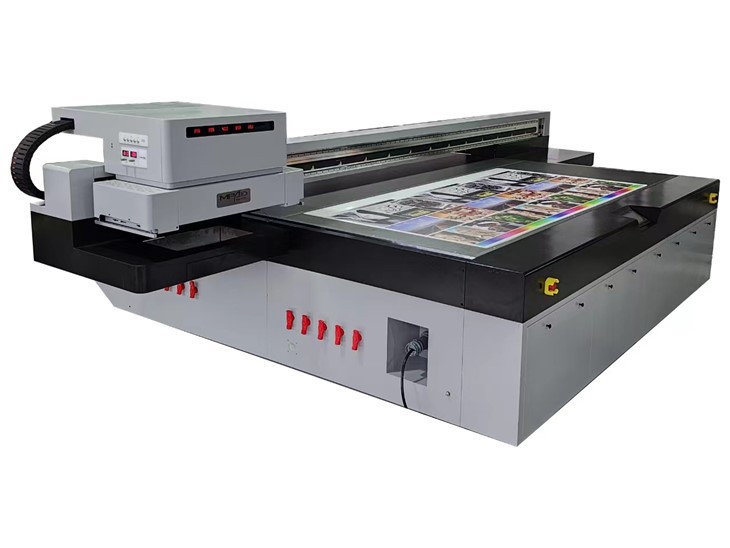
First off, let's talk about what large UV printers are all about. These bad boys are pretty amazing pieces of technology. They use UV - curing inks, which means the ink dries almost instantly when exposed to UV light. This allows for high - quality, detailed prints on a wide variety of materials. We've got different types of UV printers in our range, like the Small Format UV Printer for smaller jobs and the Digital Flatbed UV Printer and Digital Flatbed Printer for more versatile printing needs.
Now, back to the main question: printing on mirror surfaces. Mirrors are unique. They have a smooth, reflective surface that's quite different from regular printing materials like paper, wood, or plastic. When it comes to printing on mirrors, there are a few things to consider.
The Technical Side
Large UV printers work by spraying tiny droplets of ink onto the surface. The UV light then cures the ink almost immediately. For mirror surfaces, the main challenge is adhesion. Mirrors are usually made of glass with a reflective coating. The smoothness of the glass and the nature of the coating can make it difficult for the ink to stick properly.
To overcome this, we often use special pre - treatments. These pre - treatments can help the ink adhere better to the mirror surface. They work by creating a kind of "grip" for the ink droplets. Some pre - treatments are chemical, which modify the surface at a molecular level. Others are physical, like lightly sanding the surface to create a more textured area for the ink to hold onto.
Another factor is the type of ink used. Not all UV inks are created equal. Some are formulated specifically for glass and mirror surfaces. These inks have additives that improve adhesion and durability. They're also designed to withstand the reflective properties of the mirror without losing their color or quality.
The Printing Process
When printing on a mirror with a large UV printer, the first step is to clean the mirror thoroughly. Any dust, fingerprints, or smudges can affect the printing quality. After cleaning, we apply the pre - treatment as mentioned earlier. This step is crucial for getting a good print.
Once the pre - treatment is done and dry, we load the mirror onto the printer bed. The printer software then takes over. It reads the design file and precisely controls the movement of the print heads. The print heads spray the UV ink onto the mirror surface in a pattern that matches the design.
As soon as the ink hits the surface, the UV lamps come on and cure the ink. This happens so fast that the ink doesn't have time to spread or run. The result is a sharp, detailed print on the mirror.
Quality and Durability
The quality of the print on a mirror depends on several factors. As I said, proper pre - treatment and the right type of ink are essential. The resolution of the printer also plays a big role. Higher - resolution printers can produce more detailed and sharper prints.
In terms of durability, a well - printed mirror can last a long time. The UV - cured ink is resistant to fading, scratching, and moisture. However, it's still important to handle the printed mirror with care. Avoid using abrasive cleaners or scrubbing the print directly.
Applications
Printing on mirrors with large UV printers has a ton of cool applications. In the interior design world, printed mirrors can be used as decorative elements. You can print patterns, images, or even text on mirrors to create unique wall art or statement pieces.
In the advertising and marketing industry, printed mirrors can be used as promotional items or display pieces. For example, a company could print its logo and branding on a mirror to give away at events or use in store displays.
Advantages of Using a Large UV Printer for Mirror Printing
There are several advantages to using a large UV printer for mirror printing. First, the large format allows you to print big designs on mirrors. This is great for creating large - scale decorative pieces or advertising displays.
Second, the UV - curing process means you can get your prints done quickly. There's no need to wait for the ink to dry naturally, which saves a lot of time, especially when you have a large order.
Third, the versatility of large UV printers means you can experiment with different designs and colors. You're not limited to just simple black - and - white prints. You can create full - color, high - quality prints on mirrors.
Challenges and Limitations
Of course, there are also some challenges and limitations. As I mentioned earlier, adhesion can be a problem. If the pre - treatment isn't done correctly or the wrong type of ink is used, the print may start to peel or fade over time.
The cost is another factor. Special pre - treatments and inks for mirror printing can be more expensive than regular printing materials. This can increase the overall cost of the printing project.
Also, large UV printers are complex machines. They require skilled operators to ensure that the printing process goes smoothly. If the operator isn't experienced, it can lead to issues like misaligned prints or uneven ink distribution.
Conclusion
So, can a large UV printer print on mirror surfaces? The answer is yes, but it comes with its own set of challenges. With the right pre - treatment, the appropriate type of ink, and a skilled operator, you can achieve high - quality, durable prints on mirrors.
If you're interested in using our large UV printers for mirror printing or any other printing needs, we'd love to hear from you. Whether you're a small business looking for promotional items or an interior designer wanting to create unique pieces, we've got the solutions for you. Reach out to us to start a conversation about your printing requirements and let's work together to bring your ideas to life.
References
- Industry knowledge and experience as a large UV printer supplier.
- Technical manuals and research on UV inks and printing on glass surfaces.