

UV Flatbed Printer
MPA Digital Technology : Your Trustworthy UV Flatbed Printer Supplier!
MPA Digital Technology Co., Ltd. (hereinafter referred to as MPAD) was established in 2012 and is composed of experts dedicated to the research and development of digital large-format printers. MPAD has an independent R&D team with rich experience and knowledge in large-format printer design, especially complete control systems for UV flatbed printers and UV roll-to-roll printers, allowing us to provide customers with stable and exciting products and continuous technological innovation.
Rich Products
We can produce UV printers, UV flatbed printers, UV roll printers, hybrid UV printers, single-channel inkjet printers, digital UV flatbed printers, high-speed UV printers, UV printer flatbed printers, and more.
Products Widely Used
The products we produce can be widely used in signage and graphics, interior decoration, textiles and apparel, outdoor advertising, labels and packaging, promotional products, fine art reproductions, architectural graphics and more.
Many Partners
We have customers and partners in many countries, including the United States, United Kingdom, Spain, Greece, Poland, Russia, India, Turkey, Kazakhstan, Singapore, Israel, United Arab Emirates, Algeria, etc.
Customizable
Our team has 10 years of professional R&D and production experience in the field of digital large-format printer product R&D and is able to meet the needs of different markets and customers.
-
![6090 Uv Printer]()
-
![Digital Flatbed Printer]()
-
![Flatbed Sign Printer]()
-
![UV Printing Flatbed]() UV Printing Flatbed[Beyonder 3222 UV Flatbed Printer---We offer customized models to meet your exact business needs, including configurations for multiple printheads and special options like varnish for premium...read more
UV Printing Flatbed[Beyonder 3222 UV Flatbed Printer---We offer customized models to meet your exact business needs, including configurations for multiple printheads and special options like varnish for premium...read more -
![Industrial Flatbed Printer]()
-
![Flatbed UV Led]() Flatbed UV LedBeyonder 2513 UV Flatbed Printer-This flatbed UV led printer is designed to handle high-volume production while maintaining exceptional print quality, making it a great choice for businesses...read more
Flatbed UV LedBeyonder 2513 UV Flatbed Printer-This flatbed UV led printer is designed to handle high-volume production while maintaining exceptional print quality, making it a great choice for businesses...read more -
![Large Flatbed Printer]() Large Flatbed PrinterBeyonder 2513 UV Flatbed Printer-This UV large flatbed printer is designed for mass production, providing both efficiency and high-quality results, making it a great choice for businesses that...read more
Large Flatbed PrinterBeyonder 2513 UV Flatbed Printer-This UV large flatbed printer is designed for mass production, providing both efficiency and high-quality results, making it a great choice for businesses that...read more -
![UV Flatbed Printer Machine]() UV Flatbed Printer MachineBeyonder 2513 UV Flatbed Printer-This printer is built for reliable, mass production with easy operation, perfect for businesses looking to boost efficiency and maintain top-quality output.read more
UV Flatbed Printer MachineBeyonder 2513 UV Flatbed Printer-This printer is built for reliable, mass production with easy operation, perfect for businesses looking to boost efficiency and maintain top-quality output.read more -
![Digital UV Flatbed Printing Machine]() Digital UV Flatbed Printing MachineSpirit 1016 UV Flatbed Printer-The Compact UV Printer combines space-saving design with a generous 100x160cm print size, offering efficiency and versatility for diverse printing needs.read more
Digital UV Flatbed Printing MachineSpirit 1016 UV Flatbed Printer-The Compact UV Printer combines space-saving design with a generous 100x160cm print size, offering efficiency and versatility for diverse printing needs.read more -
![Digital Flatbed UV Printer]() Digital Flatbed UV PrinterSpirit B2X UV Flatbed Printer -Precision, Versatility, and Reliability: Advanced Digital Flatbed UV Printer Featuresread more
Digital Flatbed UV PrinterSpirit B2X UV Flatbed Printer -Precision, Versatility, and Reliability: Advanced Digital Flatbed UV Printer Featuresread more -
![Wide Format Flatbed Printer]() Wide Format Flatbed PrinterBeyonder 3225 UV Flatbed Printer - Sturdy and precise, fast and efficient – your new choice for customized printing, the perfect blend of quality and speed!read more
Wide Format Flatbed PrinterBeyonder 3225 UV Flatbed Printer - Sturdy and precise, fast and efficient – your new choice for customized printing, the perfect blend of quality and speed!read more -
![UV Flatbed Printer For Wood]() UV Flatbed Printer For WoodBeyonder 2513 UV Flatbed Printer-Efficient and User-Friendly UV Flatbed Printer for Wood: Dual Airflow Control, Touchscreen Interface, and High-Speed Printingread more
UV Flatbed Printer For WoodBeyonder 2513 UV Flatbed Printer-Efficient and User-Friendly UV Flatbed Printer for Wood: Dual Airflow Control, Touchscreen Interface, and High-Speed Printingread more


A UV flatbed printer is a type of digital inkjet printer that has the capability to print high-quality images and graphics onto a variety of flat and rigid materials such as wood, metal, glass, plastics, and more. The "UV" in UV flatbed printer refers to the ultraviolet light that is used to cure or dry the ink as it is printed onto the substrate. This allows for a faster printing process and produces vivid, durable, and scratch-resistant prints that are suitable for both outdoor and indoor applications. UV flatbed printers are widely used in the advertising, signage, and promotional industries for producing high-quality and customized products like banners, signs, decals, and displays.
Features of UV Flatbed Printer
Green and Environmental Protection
The UV Flatbed Printer adopts computer control, and only needs to be inkjet according to the demand, which will not waste resources, no noise will be generated during the printing process, and green printing can be realized.
The Color of the Image is Clear
The UV Flatbed Printer prints excellent results, whether it is a color pattern or a complex gradient print, the effect is perfect. This greatly improves the quality of the product. The print effect is artistic and the stereo effect are strong. Whether it's individual printing or batch printing, it's perfect for the desired effect.
Print Embossed and Other Stereo Effects
The UV Flatbed Printer can not only print flat patterns, but also make relief effects on the surface of the object. This makes the print effect more stereoscopic, which is not possible with ordinary printers.
Quick Drying
UV Flatbed Printer uses ultraviolet light to quickly dry the ink. After printing, you no longer need to wait for the ink to dry, which greatly shortens the production cycle and increases production efficiency.
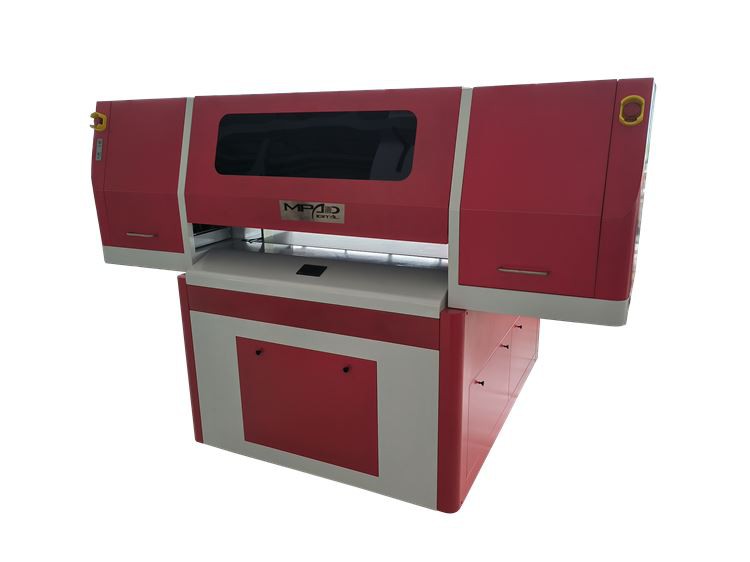
Types of UV Flatbed Printer
Flatbed UV Printer
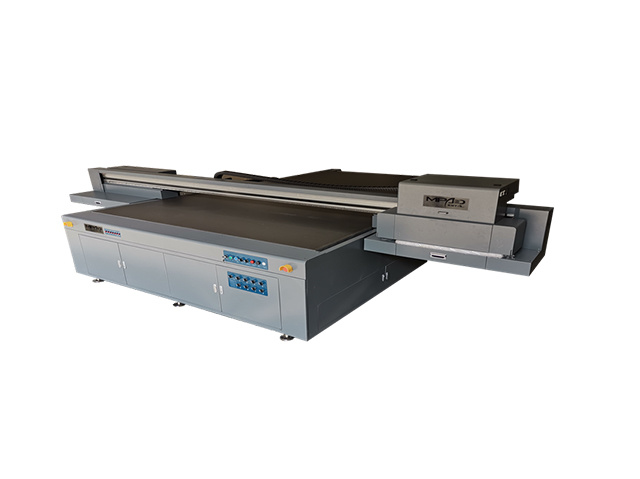
Flatbed UV printer is a UV printer that uses flatbed printing. It is especially suitable for printing large-area flat materials, such as wood boards, plastic boards, glass boards, ceramics, MDF boards, metal boards, organic boards, etc. The focus of this type of UV printer is its large printing area, which is usually used for printing large advertising banners, large car stickers, large furniture decoration and other fields.
Soft Material UV Flatbed Printer
Soft material UV flatbed printer is a printer used for printing flexible materials, such as posters, canvas, curtains, cloth, etc. This kind of UV printer usually uses flexible materials to be rolled and printed, and is especially suitable for home decoration, interior decoration, exhibitions and performances, etc.
3D Flatbed UV Printer
The 3D flatbed UV printer is a UV printer that can be used on 3D three-dimensional materials. It uses a higher-capacity nozzle and has the ability to shoot objects. This kind of UV printer is usually used in 3D characters, icons, signs, wall decorations, etc.
Multifunctional UV Flatbed Printer
The multifunctional UV flatbed printer is a UV printer that combines multiple functions such as printing, engraving, and cutting. This kind of UV printer is usually suitable for printing on multiple materials, such as leather, wood, glass, metal, plexiglass, etc.
Parts of UV Flatbed Printer
Host
The host machine of the UV flatbed printing machine is the core of the entire equipment, including the frame, paper feeding system, nozzle, curing system and other parts. The frame of the host machine is usually made of steel, which can support the weight of the entire device and enable precise printing.
Nozzle
The nozzle is an important part of the UV flatbed printer, which can spray ink or UV ink onto the surface of the object for printing. Common nozzle types include picosecond nozzles and cam nozzles. Picosecond nozzles can complete spraying in an instant, while cam nozzles can achieve higher resolution.
Curing System
The curing system is a very important part of the UV flatbed printer. It can quickly solidify the jetted ink or UV ink to ensure that the image remains stable. Common curing systems include xenon lamps, LED lamps, infrared rays, etc. Different types of curing systems have different characteristics, advantages and disadvantages.
Paper Feeding System
The paper feeding system is another key part of the UV flatbed printer, which can accurately place objects in the printing area. The paper feeding system usually includes trays, conveyor belts and other components.
Control System
The control system is an important part of the UV flatbed printing machine. It can control the entire equipment and ensure the quality and accuracy of image printing. Control systems usually consist of computers and software that can be operated and adjusted through a user interface.
Print Quality
The first thing to consider when choosing a flatbed UV printer is print quality. You want a printer that produces high-quality prints with crisp lines, vivid colors, and clear text. Look for a printer with a high-resolution printhead, such as at least 600 dpi (dots per inch). Some printers even offer resolutions up to 2400 dpi, allowing for extremely detailed prints.
Print Size
The next thing to consider is the size of the print you want to create. Flatbed UV printers come in a variety of sizes, from small desktop models to large industrial machines. Make sure the printer you choose can handle the size of the prints you need to produce. If you plan to produce large prints, you'll need a larger printer.
Material Compatibility
One of the biggest advantages of flatbed UV printing is its ability to print on a variety of materials, including wood, metal, glass, plastic, and more. However, not all printers are compatible with all materials. Make sure the printer you choose can handle the type of material you plan to print on. Some printers also offer special features, such as white ink or varnish, that enhance printing on certain materials.
Speed
Speed is another important factor to consider when choosing a flatbed UV printer. The speed of a printer is measured in how many square feet (or meters) it can print per hour. The speed of a printer depends on several factors, including print size, resolution, and the number of prints required.
Easy to Use
Finally, consider the printer's ease of use. A good flatbed UV printer should be easy to set up, operate, and maintain. Look for a printer with user-friendly software that allows you to easily adjust printing settings. Also, make sure the printer offers good technical support in case you run into any issues.
Prepare Printing Surface
The first step in using a UV flatbed printer is to prepare the surface you want to print on. The surface should be flat, even, and clear of any dust or debris to ensure a smooth, clean print.
Set Up Printer
Before starting the printing process, make sure the printer settings are correct. This includes loading the ink cartridges, adjusting the printhead, and calibrating the printer to the material you are printing on.
Create Digital Designs
After setting up your printer, create a digital design using graphic design software like Adobe Illustrator or Photoshop. The design should be saved in a format that a printer can read, such as PDF or EPS.
Load the Design Onto the Printer
Using the printer's software, load the digital design onto the printer. Make sure the design is positioned correctly and adjust print settings as needed.
Print Design
Once the design is ready, it's ready for printing. Press the "Print" button on the printer software and the printer will begin printing the design onto the surface.
Curing Ink
After your design is printed, it's important to cure the ink to ensure it adheres properly to the surface. Most UV flatbed printers have built-in UV lamps that cure the ink immediately after printing.
Complete Printing
Once the ink has cured, printing should be complete. Remove it from the printer and inspect it for any defects.
How to Maintain UV Flatbed Printer
Clean the Printhead and Rollers Regularly
Before using a UV flatbed printer, it is very important to keep the print head and roller clean. The print head and roller are key components for ejecting or evenly distributing ink on the printing material. If they are dirty or clogged, it can cause poor print quality or the printer to freeze. Therefore, make sure you clean the printhead and rollers regularly.
Regularly Replace Ink and Maintain Ink Supply System
UV flatbed printers need to replace ink regularly to ensure that the printed images are bright and clear. In addition, the printer's ink supply system also requires regular maintenance, including cleaning ink cartridges and replacing ink pumps. These tasks can improve the stability and reliability of the printer.
Maintain the Printer Environment
It is also very important to keep the environment where the UV flatbed printer is located dry and clean. Keep the area around the printer clean and well ventilated to prevent dust or other impurities from entering the printer and affecting its normal operation. In addition, it is also necessary to control the temperature and humidity of the printer, because too high or too low ambient temperature and humidity will have a negative impact on the printer's work.
Perform Regular Printer Maintenance and Upkeep
Regular maintenance and upkeep of UV flatbed printers is also very necessary. Check your printer's instructions to learn how you should clean and maintain your printer regularly. These manual steps may include cleaning ink cartridges, replacing printheads, checking cables, aligning printheads, etc. These steps can extend the life of your printer and ensure consistent print quality.
Applications of UV Flatbed Printer
Advertising Production Field
UV flatbed printers are widely used in advertising production, including advertising banners, outdoor advertising signs, exhibition hall background boards, building advertising, etc. Compared with traditional printing methods, UV flatbed printers have the characteristics of high efficiency, bright colors, clear images, and durability. In addition, it can print on any material, such as backboard, PVC board, acrylic, metal plate, etc., so it has a wide range of uses.
Gift Making Field
UV flatbed printers are also very popular in the field of gift production, such as printing personalized mobile phone cases, keychains, cups, etc. Different from traditional gift customization methods, UV flatbed printers have the characteristics of fast printing speed, high printing quality, and no need for color registration and color adjustment during printing. Therefore, customers' design requirements can be easily transformed into high-quality gifts.
Home Decoration Field
UV flatbed printers are also widely used in the field of home decoration. For example, we can use UV flatbed printers to print personalized wall panels, ceilings, floor tiles, windows, glass, bathroom fixtures, etc. Compared with traditional printing methods, the products produced by UV flatbed printers are clear, colorful, and clear. They are also durable, splash-resistant, waterproof, and sun-proof, which can bring excellent visual effects to home decoration.
Commercial Printing Field
UV flatbed printers are also widely used in commercial printing. For example, business card printing, photo sound wall, conference stickers, etc. Compared with traditional printing machines, UV flatbed printers can print richer colors and details, and can also spray on high-temperature materials such as tempered glass and ceramic tiles.
Certificate

Frequently Asked Questions
Q: What is a UV flatbed printer?
Q: How does a UV flatbed printer work?
Q: What are the advantages of using a UV flatbed printer compared to other types of printers?
Q: What kinds of materials can UV flatbed printers print on?
Q: What is the maximum size of the prints that a UV flatbed printer can produce?
Q: What kind of ink is used in a UV flatbed printer?
Q: How long does the ink in a UV flatbed printer last?
Q: What is the cost of a UV flatbed printer?
Q: What are the maintenance requirements of a UV flatbed printer?
Q: How often should a UV flatbed printer be serviced?
Q: How many colors can a UV flatbed printer print?
Q: What is the resolution of a UV flatbed printer?
Q: Can a UV flatbed printer print photographic quality images?
Q: How long does it take to print a full-color image on a UV flatbed printer?
Q: What is the maximum thickness of the material that can be used in a UV flatbed printer?
Q: Can a UV flatbed printer print on uneven or irregular surfaces?
Q: Can a UV flatbed printer be used for outdoor signage?
Q: What industries commonly use UV flatbed printers?
Q: Are there any safety concerns when using a UV flatbed printer?
Q: What are the environmental benefits of using a UV flatbed printer?
As one of the leading UV flatbed printer suppliers in China, we warmly welcome you to buy high-grade UV flatbed printer for sale here from our factory. All our products are with high quality and competitive price. Contact us for more details.
embossed uv printing, UV Digital Printer, 6090 uv flatbed printer