

A flatbed printer is a revolutionary piece of equipment in the printing industry, offering unparalleled versatility and precision. As a leading flatbed printer supplier, I'm excited to share with you how these remarkable machines work.
1. Basic Components of a Flatbed Printer
Before delving into the working mechanism, it's essential to understand the key components of a flatbed printer. A typical flatbed printer consists of the following parts:
- Print Head: This is the heart of the printer. It contains numerous nozzles that eject ink droplets onto the printing surface. Modern print heads are designed to be highly precise, capable of producing fine details and high - resolution images.
- Flatbed Platform: As the name suggests, the flatbed platform provides a stable surface for the material to be printed on. It can be adjusted in terms of height to accommodate different thicknesses of substrates, ranging from thin papers to thick wooden boards or metal sheets.
- Ink System: The ink system stores and supplies ink to the print head. It includes ink cartridges or bulk ink tanks, along with a series of tubes and pumps to ensure a consistent flow of ink.
- Motion Control System: This system controls the movement of the print head and the flatbed platform. It allows for precise positioning and movement in both the X and Y directions, enabling the printer to cover the entire printing area accurately.
- UV Curing System (for UV flatbed printers): In UV flatbed printers, the UV curing system is crucial. It uses ultraviolet light to instantly cure the UV - ink as it is printed on the substrate, ensuring fast drying and high - quality prints.
2. The Printing Process
The printing process of a flatbed printer can be divided into several steps:
Step 1: Preparation
- Substrate Selection: First, the user needs to select the appropriate substrate for printing. This could be a variety of materials such as plastic, glass, ceramic, wood, or metal. The flatbed printer's ability to print on different substrates is one of its major advantages.
- File Preparation: The digital image or design that needs to be printed is prepared on a computer. This involves adjusting the color, resolution, and size of the image to ensure optimal printing results. The file is then transferred to the printer's software.
- Printer Setup: The flatbed printer is set up according to the substrate and the printing requirements. This includes adjusting the height of the flatbed platform to match the thickness of the substrate, selecting the appropriate ink type, and calibrating the printer.
Step 2: Ink Ejection
- Once the printer is set up and the file is ready, the printing process begins. The print head moves across the flatbed platform in a controlled manner. As it moves, the nozzles in the print head eject tiny droplets of ink onto the substrate.
- The ink droplets are precisely placed on the substrate according to the digital design. The size and frequency of the ink droplets are controlled by the printer's software, which determines the color and density of the printed image.
- In some flatbed printers, multiple print heads may be used simultaneously to increase the printing speed and improve the quality of the prints.
Step 3: Motion Control
- The motion control system plays a vital role in this step. It moves the print head back and forth across the flatbed platform in a raster pattern. This means that the print head moves in parallel lines, covering the entire printing area gradually.
- The flatbed platform may also move in the opposite direction to the print head's movement in some printers, further optimizing the printing process. The precise movement of the print head and the flatbed platform ensures that the ink is evenly distributed on the substrate, resulting in a high - quality print.
Step 4: UV Curing (for UV Flatbed Printers)
- In UV flatbed printers, as soon as the ink is printed on the substrate, it passes under the UV curing system. The UV light emitted by the system causes a chemical reaction in the UV - ink, which instantly cures the ink.
- This process has several benefits. Firstly, it allows for fast printing speeds as the ink dries immediately. Secondly, it results in high - quality prints with sharp colors and excellent adhesion to the substrate. Thirdly, UV - cured prints are more resistant to scratches, fading, and environmental factors compared to traditional ink prints.
Step 5: Final Inspection
- After the printing process is complete, the printed substrate is removed from the flatbed platform. A final inspection is carried out to check for any defects or imperfections in the print. If necessary, minor adjustments can be made to the printer settings for future prints.
3. Different Types of Flatbed Printers
Large Flatbed Printer
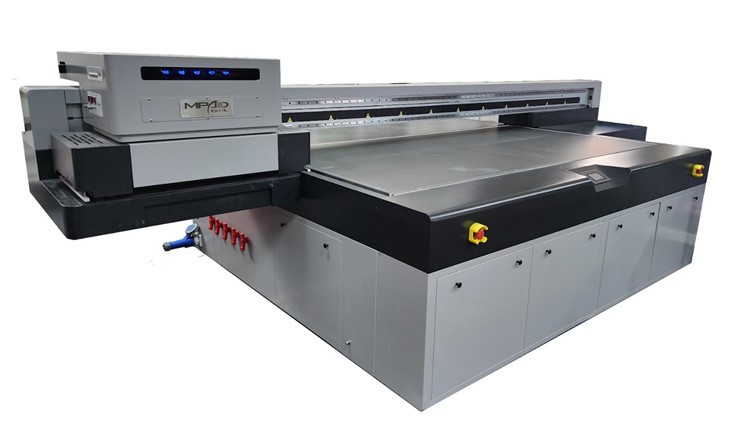
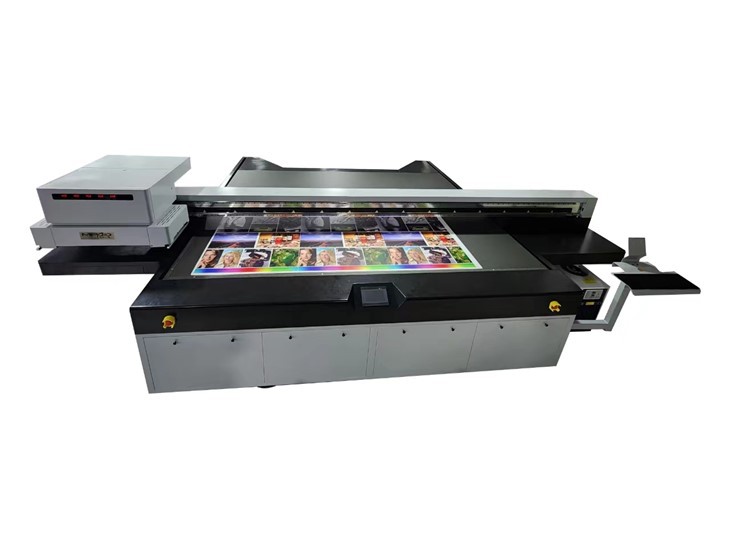
Large flatbed printers, such as the Large Flatbed Printer, are designed to handle large - scale printing jobs. They have a larger flatbed platform, which allows for printing on larger substrates. These printers are often used in industries such as advertising, signage, and large - format graphic printing. They can produce high - quality prints on substrates up to several meters in size, making them ideal for creating large banners, wall murals, and vehicle wraps.
UV Printer Flatbed
UV Printer Flatbed uses UV - curable ink, which offers several advantages over traditional inks. As mentioned earlier, UV - ink dries instantly under UV light, resulting in fast printing speeds and high - quality prints. UV - cured prints are also more durable and resistant to environmental factors. UV flatbed printers are widely used in industries where long - lasting and high - quality prints are required, such as the packaging, electronics, and automotive industries.
Digital Flatbed Printer
Digital Flatbed Printer offers a high - level of digital control and precision. It can print complex designs and images with high resolution and accuracy. Digital flatbed printers are often used for custom printing jobs, such as personalized gifts, promotional items, and small - batch production. They provide a cost - effective solution for businesses that require high - quality, on - demand printing.
4. Advantages of Flatbed Printers
- Versatility: As mentioned earlier, flatbed printers can print on a wide variety of substrates, making them suitable for many different industries and applications.
- High - Quality Prints: With their precise ink ejection and motion control systems, flatbed printers can produce high - resolution prints with sharp colors and fine details.
- Fast Printing Speeds: Especially in UV flatbed printers, the UV curing system allows for fast drying and high - speed printing, increasing productivity.
- Customization: Flatbed printers are ideal for custom printing jobs. They can print unique designs and images on demand, meeting the specific needs of customers.
5. Contact for Purchase and Negotiation
If you are interested in purchasing a flatbed printer for your business, we are here to help. Our team of experts can provide you with detailed information about our products, including features, specifications, and pricing. We also offer professional installation, training, and after - sales support services.
Whether you need a large - scale Large Flatbed Printer, a high - performance UV Printer Flatbed, or a precise Digital Flatbed Printer, we have the right solution for you. Contact us today to start the negotiation process and take your printing business to the next level.
References
- "Printers and Scanners: Technology and Applications" by John Doe.
- "The Handbook of Digital Printing" by Jane Smith.
- Industry reports on flatbed printers from leading market research firms.