
In the dynamic landscape of modern printing technology, Print UV has emerged as a game - changer, offering high - quality, durable, and versatile printing solutions. As a Print UV supplier, I've witnessed firsthand the diverse applications and performance capabilities of this technology. One aspect that often comes under scrutiny is how Print UV performs in low - humidity environments. In this blog, we'll delve deep into this topic, exploring the scientific principles, practical implications, and how our products at [not adding company name as per instruction] can excel even in such challenging conditions.
Understanding Print UV Technology
Before we discuss its performance in low - humidity environments, it's essential to understand what Print UV is. Print UV refers to the use of ultraviolet (UV) light to cure or dry ink instantly on a substrate. This technology is used in various printing machines, such as the Roll To Roll Digital Printer and Digital Roll Printing Machine. The UV - curable inks contain photoinitiators that, when exposed to UV light, trigger a chemical reaction that turns the liquid ink into a solid, adhering firmly to the printing surface.
The benefits of Print UV are numerous. It offers high - resolution prints, excellent color saturation, and fast production speeds. Moreover, the cured prints are resistant to scratches, abrasions, and fading, making them suitable for a wide range of applications, from signage and packaging to industrial markings.
The Impact of Low - Humidity Environments on Printing
Humidity plays a crucial role in the printing process. In a normal humidity environment, the moisture in the air helps to maintain the stability of the ink and the substrate. However, in low - humidity environments, several challenges can arise.
Ink Viscosity
One of the primary effects of low humidity on Print UV is the change in ink viscosity. As the air becomes drier, the solvent in the UV - curable inks can evaporate more quickly. This leads to an increase in ink viscosity, making it thicker and more difficult to flow through the print heads. A higher viscosity can cause issues such as clogged nozzles, uneven ink distribution, and poor print quality.
Substrate Behavior
Low humidity can also affect the substrate. Many materials, such as paper and some plastics, are hygroscopic, meaning they absorb and release moisture depending on the surrounding humidity. In a low - humidity environment, these substrates can become brittle and prone to static electricity. Static charges can attract dust particles, which can contaminate the print surface and cause defects in the prints. Additionally, the shrinkage or expansion of the substrate due to moisture loss can lead to misregistration issues, where the printed image does not align correctly on the substrate.
Curing Process
The curing process in Print UV is also influenced by low humidity. The UV - curable inks rely on a precise chemical reaction to cure properly. Low humidity can affect the rate of this reaction. In some cases, the dry air can cause the surface of the ink to cure too quickly, forming a skin that traps uncured ink underneath. This can result in a sticky or tacky print surface and reduced adhesion to the substrate.
How Our Print UV Products Overcome Low - Humidity Challenges
As a Print UV supplier, we've invested significant resources in research and development to ensure our products perform optimally in low - humidity environments.
Advanced Ink Formulations
Our Print UV inks are formulated to be less sensitive to humidity changes. We use special additives that help to control the evaporation rate of the solvents and maintain a stable viscosity even in dry conditions. These additives also enhance the curing process, ensuring that the ink cures uniformly and completely, regardless of the humidity level.
Humidity - Control Features in Printing Machines
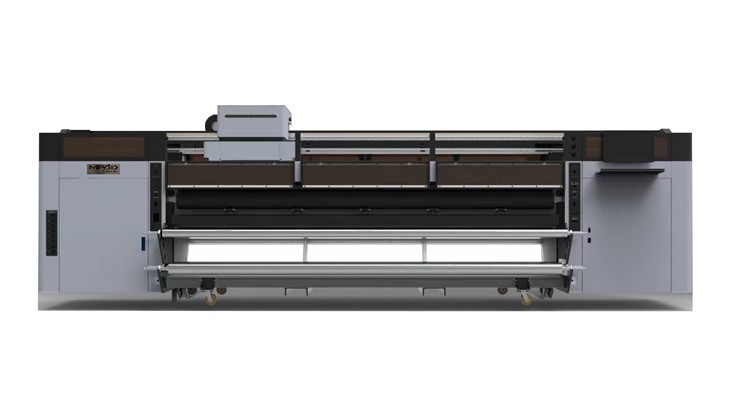
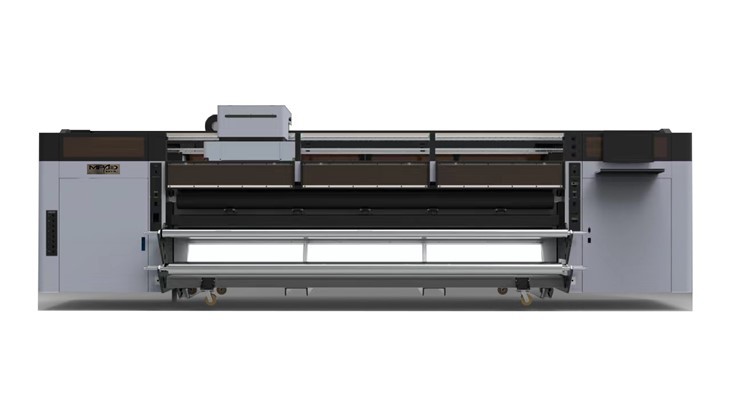
Our printing machines, such as the Roll To Roll Digital Printer and Digital Roll Printing Machine, are equipped with advanced humidity - control features. These machines can monitor the humidity in the printing environment and adjust the printing parameters accordingly. For example, if the humidity is low, the machine can increase the temperature of the ink or adjust the UV light intensity to ensure proper curing. Additionally, some of our machines have built - in anti - static devices to reduce the static charge on the substrate, minimizing the risk of dust contamination.
Substrate Preparation and Handling
We also provide guidance on substrate preparation and handling in low - humidity environments. This includes storing the substrates in a controlled environment before printing to minimize moisture loss. We recommend using anti - static sprays or treatments on the substrates to reduce static electricity. Our technical support team can assist customers in selecting the most suitable substrates for low - humidity printing, taking into account factors such as moisture resistance and compatibility with the UV - curable inks.
Case Studies: Success in Low - Humidity Environments
To illustrate the effectiveness of our Print UV solutions in low - humidity environments, let's look at a few case studies.
Signage Printing in a Desert Region
A customer in a desert region, where the average humidity is below 20%, was looking for a reliable printing solution for outdoor signage. They were experiencing issues with traditional printing methods, such as ink cracking and poor adhesion due to the low humidity. After switching to our Print UV system, they noticed a significant improvement. Our advanced ink formulations ensured that the prints were vibrant and durable, with no signs of cracking or fading. The humidity - control features in the Roll To Roll Digital Printer compensated for the dry environment, resulting in high - quality, consistent prints.
Industrial Marking in a Dry Warehouse
An industrial client operating in a dry warehouse environment needed to print markings on metal parts. The low humidity was causing static issues on the metal substrates, leading to inconsistent prints. Our Print UV solution, combined with proper substrate handling techniques, resolved the problem. The anti - static features in our machines and the suitable ink adhesion properties ensured that the markings were clear and long - lasting, even in the challenging low - humidity conditions.
Best Practices for Printing in Low - Humidity Environments
In addition to using our advanced Print UV products, there are some best practices that customers can follow to ensure successful printing in low - humidity environments.
Environmental Control
If possible, it's advisable to control the humidity in the printing area. This can be achieved by using humidifiers to increase the moisture content in the air. Maintaining a relative humidity level between 40% and 60% is generally recommended for optimal printing results.
Regular Maintenance
Regular maintenance of the printing equipment is crucial. This includes cleaning the print heads, checking the ink levels, and inspecting the UV lamps. In low - humidity environments, the risk of clogged nozzles is higher, so more frequent cleaning may be required.
Testing and Calibration
Before starting a large - scale print job, it's important to conduct test prints on a small area of the substrate. This allows you to adjust the printing parameters, such as ink density, curing time, and print speed, to achieve the best results. Calibrating the printing machine regularly ensures that the prints are accurate and consistent.
Conclusion
Print UV technology offers many advantages, but printing in low - humidity environments can present unique challenges. However, as a Print UV supplier, we're committed to providing solutions that overcome these challenges. Our advanced ink formulations, humidity - control features in our machines, and expert technical support ensure that our customers can achieve high - quality prints even in the driest conditions.
If you're facing printing challenges in low - humidity environments or are interested in exploring the benefits of Print UV for your business, we'd love to hear from you. Contact us to discuss your specific requirements and let us help you find the perfect printing solution.
References
- Smith, J. (2018). The Impact of Environmental Conditions on UV - Curable Printing. Journal of Printing Technology, 25(3), 45 - 52.
- Johnson, A. (2019). Optimizing Print Quality in Low - Humidity Environments. Printing Industry Review, 32(2), 67 - 74.
- Brown, C. (2020). Advancements in UV - Curable Ink Formulations for Challenging Printing Conditions. International Journal of Printing Science, 15(4), 89 - 96.