

As a supplier of UV Flatbed Printers, I often get asked about various technical aspects of our products. One question that frequently comes up is, "What is the inter - color registration accuracy of a UV Flatbed Printer?" In this blog post, I'll delve deep into this topic to provide you with a comprehensive understanding.
Understanding Inter - Color Registration Accuracy
Inter - color registration accuracy refers to the precision with which different colors are printed in relation to each other on a substrate. In a UV Flatbed Printer, this is crucial because it directly impacts the quality of the final print. When you're printing a multi - colored image, each color layer needs to be perfectly aligned with the others. Any misalignment can result in blurry or distorted images, which is unacceptable in high - quality printing.
Let's take a simple example. Suppose you're printing a photograph with a lot of fine details and a wide range of colors. If the red layer is not perfectly aligned with the blue and green layers, the edges of objects in the photo may appear fuzzy, and the overall color balance may be off. This can significantly degrade the visual appeal of the print.
Factors Affecting Inter - Color Registration Accuracy
Several factors can influence the inter - color registration accuracy of a UV Flatbed Printer.
Mechanical Components
The mechanical structure of the printer plays a vital role. High - quality linear guides and ball screws are essential for smooth and precise movement of the printhead. These components ensure that the printhead moves accurately in the X, Y, and Z axes. If the linear guides are of poor quality or become worn over time, the printhead may not move precisely, leading to misregistration.
For instance, a printer with low - grade ball screws may experience slight vibrations during movement. These vibrations can cause the printhead to deviate from its intended path, resulting in inaccurate color registration.
Printhead Technology
The type of printhead used in the UV Flatbed Printer also affects registration accuracy. Modern printheads are designed to fire ink droplets with high precision. Some printheads use advanced piezoelectric technology, which allows for more accurate control of ink droplet size and placement.
Piezoelectric printheads can adjust the firing frequency and intensity of ink droplets based on the image data. This enables them to print fine details and maintain accurate color registration even at high printing speeds. On the other hand, older or lower - quality printheads may not have such precise control, leading to less accurate color registration.
Software and Control Systems
The printer's software and control systems are responsible for coordinating the movement of the printhead and the firing of ink droplets. A well - designed software algorithm can compensate for minor mechanical inaccuracies and ensure accurate color registration.
For example, the software can adjust the timing of ink droplet firing based on the speed and position of the printhead. It can also perform real - time calibration to correct any registration errors that may occur during the printing process. However, if the software is poorly developed or not properly configured, it can lead to registration problems.
Measuring Inter - Color Registration Accuracy
There are several methods to measure the inter - color registration accuracy of a UV Flatbed Printer.
Visual Inspection
One of the simplest methods is visual inspection. A test pattern with fine lines and overlapping colors is printed, and the operator visually examines the print for any signs of misregistration. If the lines appear blurry or if there are gaps between the different color layers, it indicates a registration problem.
However, visual inspection is subjective and may not be able to detect very small registration errors. For more accurate measurements, other methods are required.
Optical Measurement Systems
Optical measurement systems use cameras and sensors to measure the position of printed marks or patterns. These systems can detect registration errors with high precision, often down to a few micrometers.
The optical sensors capture images of the printed test patterns and analyze them using specialized software. The software calculates the displacement between different color layers and provides a quantitative measurement of the registration accuracy.
Importance of High Inter - Color Registration Accuracy
High inter - color registration accuracy is essential for several reasons.
Quality of Prints
As mentioned earlier, accurate color registration is crucial for producing high - quality prints. In industries such as advertising, packaging, and fine art printing, where the visual appeal of the print is of utmost importance, even a slight registration error can make a significant difference.
For example, in advertising posters, sharp and well - aligned colors can attract more attention and convey a more professional image. In packaging printing, accurate color registration ensures that the product branding and information are clearly visible and legible.
Productivity
When the inter - color registration accuracy is high, the printer can operate more efficiently. There is less need for reprints due to registration errors, which saves time and resources. This leads to increased productivity and reduced costs for the printing business.
Our UV Flatbed Printers and Inter - Color Registration Accuracy
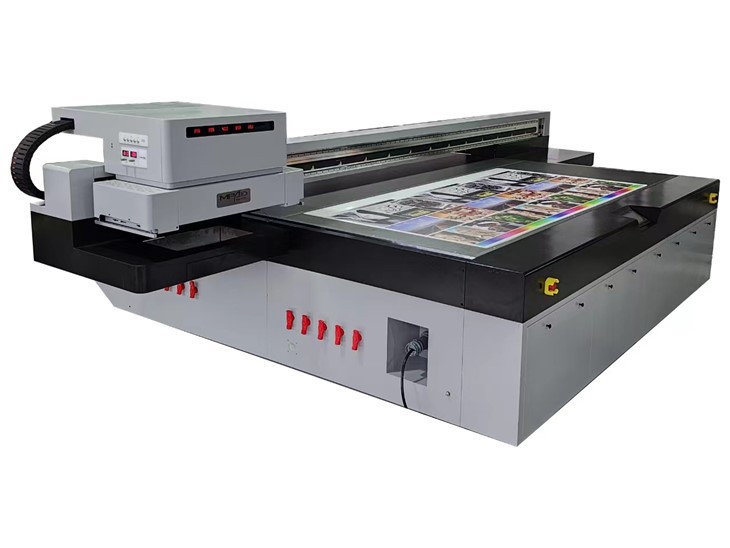
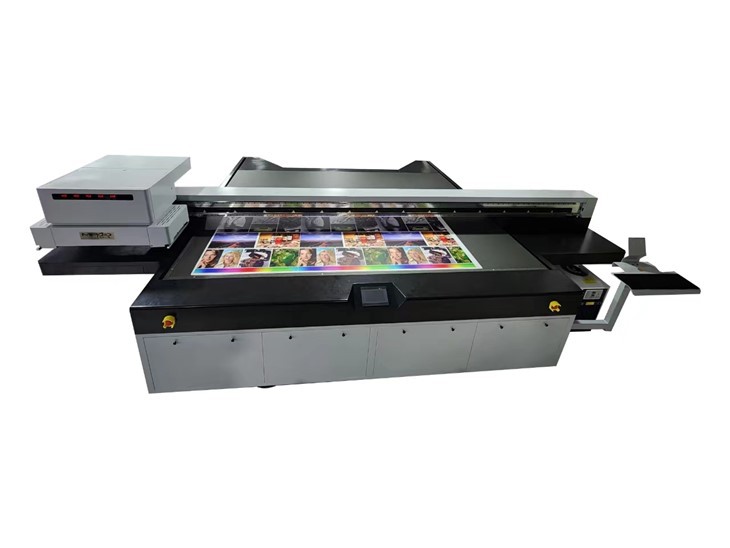
At our company, we take inter - color registration accuracy very seriously. Our Wide Format Flatbed Printer and Large Format UV Flatbed Printer are equipped with high - quality mechanical components, advanced printhead technology, and sophisticated software and control systems.
We use precision linear guides and ball screws to ensure smooth and accurate movement of the printhead. Our printheads are state - of - the - art, capable of firing ink droplets with extreme precision. The software is constantly updated to improve performance and ensure accurate color registration.
In addition, we perform rigorous testing on each printer before it leaves the factory. We use optical measurement systems to measure the inter - color registration accuracy and make any necessary adjustments to ensure that our printers meet the highest standards.
Applications of UV Flatbed Printers with High Inter - Color Registration Accuracy
Our UV Printing Flatbed printers with high inter - color registration accuracy are suitable for a wide range of applications.
Signage and Advertising
In the signage and advertising industry, high - quality prints are essential to attract customers. Our printers can produce vibrant, sharp, and accurately registered prints on various substrates, such as acrylic, aluminum, and PVC. This allows businesses to create eye - catching signs and banners that stand out.
Packaging Printing
For packaging printing, accurate color registration is crucial for maintaining brand consistency. Our printers can print on different types of packaging materials, including cardboard, paperboard, and plastic. The high inter - color registration accuracy ensures that the product branding and information are printed clearly and precisely.
Fine Art Printing
Fine art printers require the highest level of accuracy to reproduce paintings and other artworks faithfully. Our UV Flatbed Printers can achieve exceptional color registration, allowing artists and galleries to produce high - quality prints that closely match the original artworks.
Conclusion
Inter - color registration accuracy is a critical factor in the performance of a UV Flatbed Printer. It directly impacts the quality of the final print, productivity, and the suitability of the printer for various applications. At our company, we are committed to providing UV Flatbed Printers with the highest level of inter - color registration accuracy.
If you're in the market for a UV Flatbed Printer and are looking for a reliable supplier that can offer high - quality products with excellent color registration, we'd love to hear from you. Contact us to discuss your printing needs and explore how our printers can meet your requirements.
References
- "Principles of Digital Printing" by John F. X. Amsden
- "UV Printing Technology" by Peter Wilson