
Hey there! As a Print UV equipment supplier, I often get asked about the power consumption of our gear. It's a super important topic, especially for businesses looking to manage their costs and be more energy - efficient. So, let's dive right in and explore what goes into the power consumption of Print UV equipment.
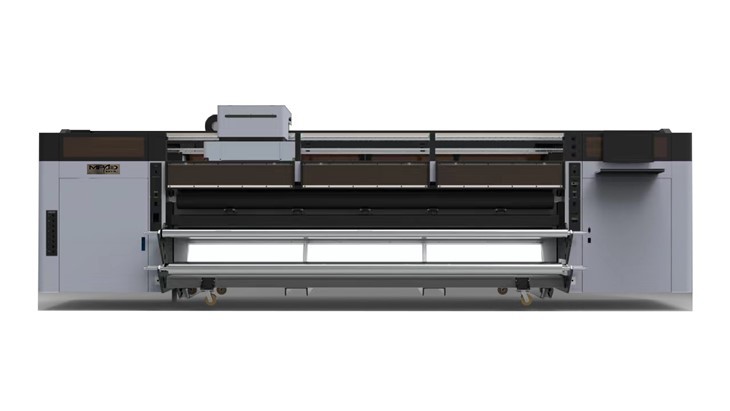
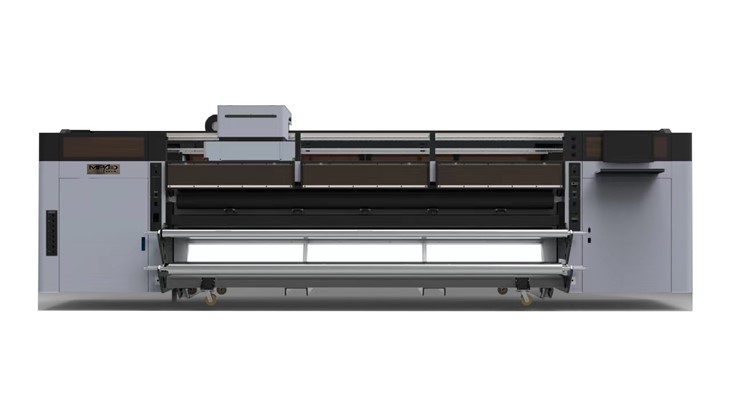
First off, it's crucial to understand that the power consumption of Print UV equipment can vary widely. There are a bunch of factors that play into it. The type of printer is one of the biggest influencers. For example, a Roll To Roll Digital Printer has a different power profile compared to a Banner Printer.
Roll - to - roll printers are designed to handle large - scale printing jobs. They usually have more powerful motors to move the media smoothly and quickly. These motors need a good amount of electricity to operate. Also, the UV curing systems in these printers are often more robust because they need to cure large areas of ink in a short time. The UV lamps in a roll - to - roll printer can consume a significant amount of power. They work by emitting ultraviolet light to dry the ink instantly, and this process requires energy.
On the other hand, banner printers, while also using UV technology, might be a bit more energy - efficient in some cases. They are often used for printing large banners, but they might not have the same high - speed production requirements as a full - fledged roll - to - roll digital printer. So, the motors and UV curing systems might be scaled down a bit, which means lower power consumption.
Another factor that affects power consumption is the print resolution. If you're printing at a high resolution, the printer has to work harder. It needs to place more ink droplets precisely on the media, which means the print heads have to move more frequently and accurately. This increased activity of the print heads and the associated control systems leads to higher power usage. For instance, if you're printing a detailed photo with a lot of color variations at a very high DPI (dots per inch), the printer will use more power compared to printing a simple text - based banner at a lower resolution.
The size of the print job also matters. A large - scale print job that runs for hours will obviously consume more power than a small, quick print. When the printer is running continuously, all its components are working non - stop. The motors are constantly moving the media, the print heads are ejecting ink, and the UV lamps are curing the ink. This continuous operation adds up in terms of power consumption.
Let's talk about the components of Print UV equipment and their power consumption in more detail. The print heads are a key part of the printer. They are responsible for ejecting the ink onto the media. Modern print heads are quite advanced, but they still consume power. The more nozzles a print head has, the more power it might use because there are more channels through which the ink has to be pushed.
The UV curing system is another major power - consumer. As I mentioned earlier, the UV lamps are the heart of this system. There are different types of UV lamps, such as mercury vapor lamps and LED UV lamps. Mercury vapor lamps have been around for a long time. They are powerful and can cure ink quickly, but they also consume a lot of power. They need to reach a high temperature to emit the right amount of ultraviolet light, and this heating process requires energy.
LED UV lamps, on the other hand, are a more energy - efficient alternative. They don't need to heat up like mercury vapor lamps. They can be turned on and off instantly, and they consume less power while still providing effective UV curing. In recent years, more and more Print UV equipment is using LED UV lamps because of their energy - saving benefits.
The power supply unit of the printer is also an important consideration. It has to convert the incoming electrical power into the right voltage and current for all the components of the printer. A high - quality power supply unit is more efficient, which means it wastes less power in the conversion process. If you have a low - quality power supply unit, it might consume more power overall because it's not converting the electricity as efficiently.
Now, let's look at some ways to reduce the power consumption of Print UV equipment. One of the simplest ways is to optimize your print settings. As I mentioned before, printing at a lower resolution when possible can save a lot of power. You can also adjust the print speed. Sometimes, reducing the speed a bit can actually improve the energy efficiency because the printer doesn't have to work as hard.
Another way is to use energy - efficient components. As I said, LED UV lamps are a great option. If you're in the market for a new Print UV printer, look for models that use LED UV technology. They not only save power but also have a longer lifespan, which means less maintenance and replacement costs in the long run.
You can also implement a power - management system. Many modern printers come with built - in power - saving modes. These modes can put the printer into a low - power state when it's not in use. For example, if the printer has been idle for a certain period, it can automatically turn off some of its components, like the UV lamps or the motors, to save power.
As a Print UV equipment supplier, I understand that power consumption is a big concern for our customers. That's why we offer a range of printers with different power profiles. Whether you're a small business looking for an energy - efficient Printer UV Roll To Roll for occasional use or a large - scale printing company that needs a high - performance roll - to - roll digital printer, we have options to suit your needs.
If you're interested in learning more about our Print UV equipment and how it can fit into your power - consumption requirements, we'd love to hear from you. We can provide you with detailed information about the power consumption of each of our models and help you make an informed decision. Whether you're worried about reducing your energy costs or just want to be more environmentally friendly, we can work with you to find the right solution.
In conclusion, the power consumption of Print UV equipment is influenced by many factors, including the type of printer, print resolution, job size, and the components used. By understanding these factors and taking steps to optimize the printer's operation, you can manage your power consumption effectively. If you're in the market for Print UV equipment, don't hesitate to reach out to us. We're here to assist you in finding the perfect printer for your business.
References:
- Industry reports on Print UV technology
- Manufacturer specifications of Print UV printers
So, if you're thinking about purchasing Print UV equipment, contact us for a detailed discussion on power consumption and other features. We're ready to help you make the best choice for your business.