

As a supplier of UV Varnish Printers, I've witnessed firsthand the growing demand for high - precision printing in various industries. The print precision of a UV Varnish Printer is crucial as it directly impacts the quality and visual appeal of the printed products. In this blog, I'll explore several effective methods to improve the print precision of a UV Varnish Printer.
1. Calibration and Maintenance
Proper calibration is the foundation for achieving high - precision printing. Before starting any print job, it's essential to calibrate the printer accurately. This includes calibrating the print head alignment, ink flow rate, and UV light intensity.
The print head alignment determines the accuracy of ink deposition on the substrate. Misaligned print heads can result in blurry or uneven prints. To calibrate the print head alignment, most modern UV Varnish Printers come with built - in calibration tools. These tools use sensors to detect the position of the print head and adjust it accordingly. Regularly performing this calibration can significantly improve the print precision.
Ink flow rate is another critical factor. If the ink flow rate is too high, it can cause over - saturation and bleeding on the substrate. Conversely, a low ink flow rate may lead to incomplete or faint prints. By adjusting the ink flow rate based on the type of substrate and the desired print quality, we can ensure that the right amount of ink is deposited for each print job.
UV light intensity also plays a vital role in print precision. Insufficient UV light intensity may result in incomplete curing of the varnish, leading to smudging or scratching of the printed surface. On the other hand, excessive UV light intensity can cause the varnish to dry too quickly, which may affect the adhesion and smoothness of the print. Regularly checking and adjusting the UV light intensity according to the printer's specifications is necessary.
In addition to calibration, regular maintenance of the UV Varnish Printer is equally important. Cleaning the print heads, replacing worn - out parts, and checking the overall mechanical condition of the printer can prevent many issues that may affect print precision. For example, clogged print heads can cause uneven ink ejection, while loose mechanical components can lead to misalignment during printing.
2. Substrate Selection and Preparation
The choice of substrate has a significant impact on print precision. Different substrates have different surface characteristics, such as smoothness, absorbency, and porosity. For high - precision printing, it's advisable to choose substrates with a smooth and uniform surface. Smooth substrates allow for more accurate ink deposition and better adhesion of the varnish.
Before printing, the substrate should be properly prepared. This may involve cleaning the substrate to remove any dust, dirt, or grease that could interfere with the printing process. Some substrates may also require pre - treatment, such as corona treatment or primer application, to improve the adhesion of the varnish. For instance, plastics often need corona treatment to increase their surface energy, which helps the varnish bond better to the surface.
3. Software Optimization
Modern UV Varnish Printers are often equipped with advanced software that can be optimized to improve print precision. The software controls various aspects of the printing process, such as image processing, color management, and print head control.
Image processing software can be used to enhance the quality of the input image. It can adjust the resolution, sharpness, and color accuracy of the image before printing. By ensuring that the input image is of high quality, we can achieve more precise prints. For example, using anti - aliasing techniques in the image processing software can reduce jagged edges in the printed image, resulting in a smoother and more precise print.
Color management software is also crucial for print precision. It ensures that the colors in the printed output match the colors in the original design. By calibrating the color profile of the printer and the substrate, we can achieve accurate color reproduction. This is particularly important for applications where color accuracy is critical, such as packaging design and advertising.
The print head control software can be optimized to improve the accuracy of ink ejection. It can adjust the firing frequency, droplet size, and flight path of the ink droplets. By fine - tuning these parameters, we can ensure that the ink is deposited precisely where it's needed on the substrate.
4. Environmental Control
The environment in which the UV Varnish Printer operates can also affect print precision. Temperature and humidity are two key environmental factors that need to be controlled.
Temperature can impact the viscosity of the varnish. If the temperature is too low, the varnish may become too thick, which can affect the ink flow and the accuracy of ink deposition. On the other hand, if the temperature is too high, the varnish may dry too quickly, leading to issues such as uneven curing and poor adhesion. Maintaining a stable temperature within the recommended range for the printer can help ensure consistent print precision.
Humidity can also have an impact on the printing process. High humidity can cause the substrate to absorb moisture, which may affect its dimensional stability and the adhesion of the varnish. Low humidity, on the other hand, can cause static electricity, which can attract dust and affect the print quality. By controlling the humidity level in the printing environment, we can minimize these issues and improve print precision.
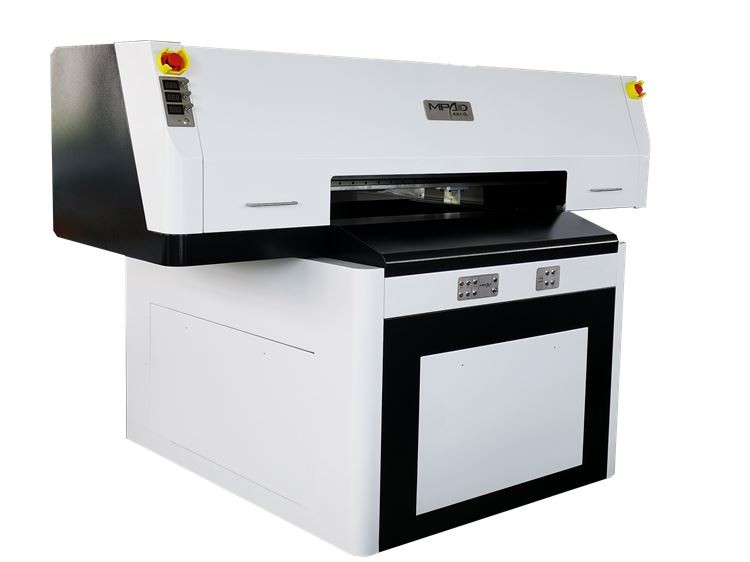
5. Print Head Technology
The technology of the print head is a fundamental factor in determining print precision. Advanced print head technologies can offer higher resolution, more accurate ink ejection, and better control over the printing process.
Some modern print heads use piezoelectric technology, which allows for precise control of the ink droplets. Piezoelectric print heads can adjust the size and frequency of the ink droplets based on the printing requirements. This results in more accurate and detailed prints.
Another important aspect of print head technology is the number of nozzles. Print heads with a higher number of nozzles can deposit more ink in a shorter time, which can improve the printing speed and precision. Additionally, multi - pass printing techniques can be used in combination with high - nozzle - count print heads to further enhance the print quality.
Conclusion
Improving the print precision of a UV Varnish Printer requires a comprehensive approach that includes calibration and maintenance, substrate selection and preparation, software optimization, environmental control, and the use of advanced print head technology. By implementing these methods, we can achieve high - quality, precise prints that meet the demands of various industries.
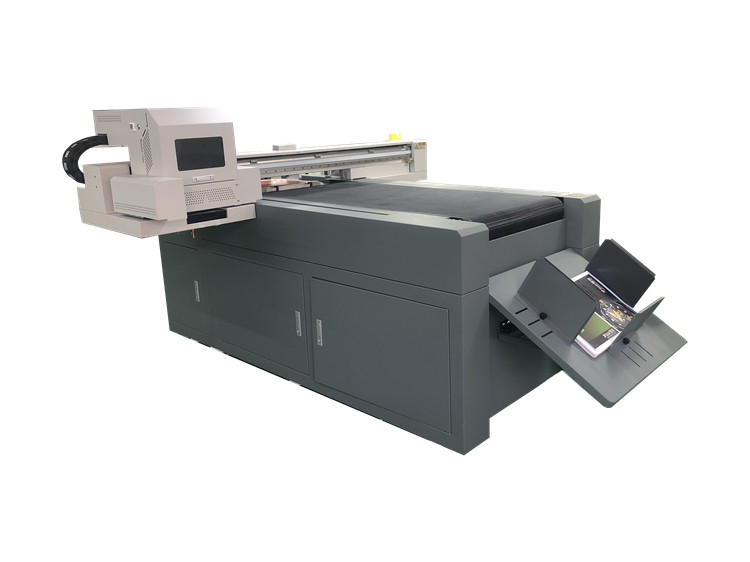
If you're in the market for a high - precision [UV Varnish Printer](/single - pass - inkjet - printer/spot - uv - printer/uv - varnish - printer.html), our company offers a wide range of options. Our printers are equipped with the latest technology and features to ensure excellent print precision. Whether you need a [UV Spot Printer](/single - pass - inkjet - printer/spot - uv - printer/uv - spot - printer.html) for spot varnish applications or a full - fledged UV Varnish Printer for large - scale production, we have the right solution for you. For more information about our products and to discuss your specific printing needs, please feel free to contact us. We look forward to working with you to achieve your printing goals.
References
- "UV Printing Technology: Principles and Applications" by John Smith
- "Advanced Inkjet Printing Systems" by Jane Doe
- Manufacturer's manuals of various UV Varnish Printers