
As a supplier of large UV printers, I often receive inquiries from customers about the materials that our printers can handle. One question that comes up quite frequently is whether a large UV printer can print on POM plastic. In this blog post, I'll delve into this topic in detail, exploring the properties of POM plastic, the capabilities of large UV printers, and the factors to consider when printing on this material.
Understanding POM Plastic
POM, or polyoxymethylene, is a high - performance engineering thermoplastic. It is also known as acetal or polyacetal. POM plastic is well - known for its excellent mechanical properties, including high stiffness, low friction coefficient, and good dimensional stability. These characteristics make it a popular choice in various industries, such as automotive, electronics, and consumer goods.
POM plastic has a smooth and non - porous surface, which can pose some challenges when it comes to printing. Its chemical structure is relatively inert, meaning it doesn't readily bond with inks without proper treatment. Additionally, POM has a high melting point, typically around 175 - 185°C, which needs to be considered during the printing process to avoid any damage to the material.
Capabilities of Large UV Printers
Large UV printers are a powerful tool in the printing industry. They use ultraviolet (UV) light to cure inks instantly as they are printed onto a surface. This technology offers several advantages over traditional printing methods.
Firstly, UV printers can print on a wide range of materials, including rigid and flexible substrates. The UV inks adhere well to different surfaces, providing high - quality, durable prints. Secondly, the instant curing process reduces the risk of smudging and allows for faster production speeds. This is particularly beneficial for large - scale printing projects.
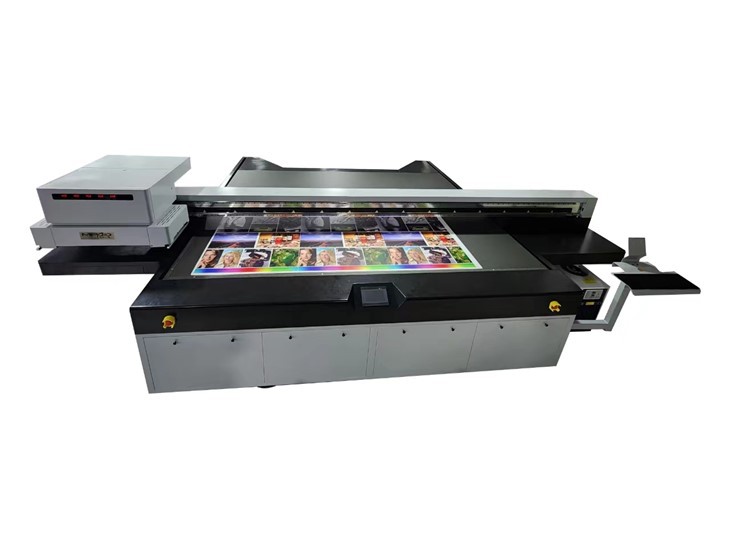
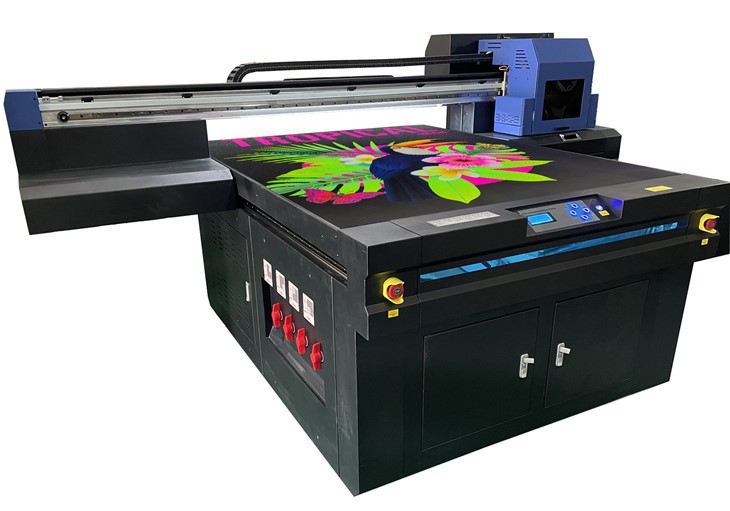
Our company offers a variety of large UV printers, such as the UV Printer Flatbed, UV 6090 Printer, and High Speed UV Printer. These printers are equipped with advanced print heads and UV curing systems, which ensure precise and efficient printing on different materials.
Printing on POM Plastic with a Large UV Printer
Printing on POM plastic with a large UV printer is indeed possible, but it requires careful consideration of several factors.
Surface Preparation
As mentioned earlier, POM plastic has a smooth and non - porous surface. To ensure good ink adhesion, surface preparation is crucial. One common method is to use a primer. A primer creates a bonding layer between the POM surface and the UV ink, improving adhesion. There are specific primers available in the market that are designed for use with POM plastic and UV inks.
Another option is to use a surface treatment such as corona treatment. Corona treatment uses high - voltage electricity to create a plasma field that modifies the surface of the POM plastic, making it more receptive to inks. This treatment can enhance the surface energy of the POM, allowing the UV inks to spread and bond more effectively.
Ink Selection
The choice of UV ink is also important when printing on POM plastic. Not all UV inks are suitable for this material. You need to select inks that are formulated to adhere to plastics, especially those with a high resistance to chemicals and abrasion. Some inks are designed to have better flexibility, which is important as POM plastic may experience some movement or stress during its use.
Our large UV printers are compatible with a wide range of UV inks. We can provide guidance on selecting the most suitable ink for printing on POM plastic based on your specific requirements.
Printing Settings
The printing settings of the large UV printer need to be adjusted according to the properties of the POM plastic. The print speed, ink density, and UV curing intensity all need to be optimized. A slower print speed may be required to ensure proper ink deposition and adhesion. The ink density should be set to achieve the desired color and opacity without over - saturating the surface.
The UV curing intensity needs to be carefully calibrated. Too high an intensity can cause the POM plastic to heat up and potentially deform, while too low an intensity may result in incomplete curing of the ink.
Advantages of Printing on POM Plastic with a Large UV Printer
Printing on POM plastic using a large UV printer offers several advantages.
Customization
Large UV printers allow for high - resolution and detailed printing. This means that you can print complex designs, logos, and text on POM plastic parts. This is particularly useful for industries that require customized components, such as the automotive and electronics industries. You can create unique and personalized POM parts for your products.
Durability
UV - cured inks are known for their durability. They are resistant to fading, scratching, and chemicals. When printed on POM plastic, the prints can withstand harsh environments and long - term use. This makes the printed POM parts suitable for a wide range of applications.
Cost - Effectiveness
For large - scale printing projects, using a large UV printer can be cost - effective. The instant curing process reduces production time, and the ability to print directly on the POM plastic eliminates the need for additional printing processes or materials.
Case Studies
Let's take a look at some real - world examples of printing on POM plastic with a large UV printer.
In the automotive industry, a company needed to print serial numbers, logos, and control panel markings on POM plastic parts. By using our High Speed UV Printer and the appropriate surface treatment and ink, they were able to achieve high - quality, durable prints. The prints were resistant to abrasion and chemicals, ensuring that they remained clear and legible throughout the lifespan of the parts.
In the electronics industry, a manufacturer wanted to print custom designs on POM plastic enclosures for their electronic devices. Our UV 6090 Printer was used to print detailed patterns and colors on the POM enclosures. The ability to print directly on the plastic saved time and cost compared to traditional printing methods.
Conclusion
In conclusion, a large UV printer can print on POM plastic, but it requires proper surface preparation, ink selection, and adjustment of printing settings. With the right approach, printing on POM plastic using a large UV printer offers many advantages, including customization, durability, and cost - effectiveness.
If you are interested in printing on POM plastic or other materials using our large UV printers, we are here to help. Our team of experts can provide you with detailed technical support and guidance on the entire printing process. Whether you have a small - scale project or a large - scale production requirement, we can offer you a suitable printing solution.
Contact us today to start a discussion about your printing needs and explore how our large UV printers can meet your requirements.
References
- "Polyoxymethylene (POM) Plastics: Properties and Applications" - Plastics Technology Handbook
- "UV Printing Technology and Its Applications" - Journal of Printing Science and Technology
- "Surface Treatment of Plastics for Printing" - International Journal of Adhesion and Adhesives