

As a supplier of UV Spot Printers, I've witnessed firsthand the intricate relationship between ink viscosity and printing quality. In this blog, I'll delve into the impact of ink viscosity on the printing quality of a UV spot printer, exploring the science behind it and sharing practical insights.
Understanding Ink Viscosity
Ink viscosity refers to the resistance of the ink to flow. It is a crucial property that affects how the ink behaves during the printing process. Viscosity is influenced by several factors, including the ink's composition, temperature, and the presence of additives.
The viscosity of ink can vary widely depending on the type of ink and the printing application. For UV spot printing, the ideal ink viscosity is typically in the range of 10 to 30 centipoise (cP). This range ensures that the ink flows smoothly through the print head and onto the substrate, while also providing good adhesion and coverage.
Impact on Printing Quality
The viscosity of the ink has a significant impact on the printing quality of a UV spot printer. Here are some of the key ways in which ink viscosity affects printing quality:
Droplet Formation and Placement
The viscosity of the ink affects the formation and placement of droplets during the printing process. If the ink is too viscous, it may not flow easily through the print head, resulting in irregular droplet formation and poor placement. This can lead to issues such as dot gain, uneven coverage, and blurred edges.
On the other hand, if the ink is too thin, the droplets may spread out too much on the substrate, causing the printed image to appear fuzzy or out of focus. In addition, thin ink may not adhere well to the substrate, leading to poor durability and smudging.
Adhesion and Bonding
Ink viscosity also plays a crucial role in the adhesion and bonding of the ink to the substrate. If the ink is too viscous, it may not wet the substrate properly, resulting in poor adhesion and bonding. This can cause the ink to peel or flake off the substrate over time, especially in areas where the substrate is flexed or bent.
Conversely, if the ink is too thin, it may not have enough body to adhere to the substrate effectively. This can lead to issues such as poor scratch resistance and low durability.
Surface Tension and Wetting
The viscosity of the ink affects its surface tension, which in turn affects how the ink wets the substrate. Surface tension is the force that causes the ink to form droplets and resist spreading out on the substrate. If the ink has too high a surface tension, it may not wet the substrate properly, resulting in poor coverage and uneven printing.
On the other hand, if the ink has too low a surface tension, it may spread out too much on the substrate, causing the printed image to appear blurry or out of focus. In addition, low surface tension can also lead to issues such as ink bleeding and poor edge definition.
Curing and Drying
The viscosity of the ink can also affect the curing and drying process. UV inks are cured using ultraviolet light, which causes the ink to polymerize and harden. If the ink is too viscous, it may take longer to cure, resulting in longer printing times and reduced productivity.
In addition, thick ink may not cure evenly, leading to issues such as uneven hardness and poor adhesion. Conversely, if the ink is too thin, it may dry too quickly, causing the ink to crack or peel off the substrate.
Controlling Ink Viscosity
To ensure optimal printing quality, it is essential to control the viscosity of the ink. Here are some of the key factors to consider when controlling ink viscosity:
Ink Composition
The composition of the ink is one of the most important factors affecting its viscosity. Different types of inks have different viscosities, and the viscosity can also be adjusted by adding or removing certain additives. For example, adding a thickener to the ink can increase its viscosity, while adding a thinner can decrease it.
Temperature
Temperature also has a significant impact on ink viscosity. As the temperature increases, the viscosity of the ink decreases, making it flow more easily. Conversely, as the temperature decreases, the viscosity of the ink increases, making it more difficult to flow.
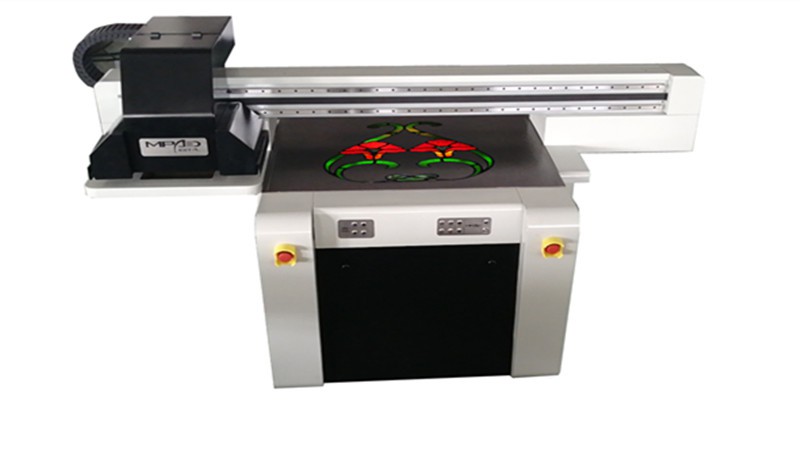

To maintain consistent ink viscosity, it is important to control the temperature of the ink and the printing environment. This can be achieved by using a temperature-controlled ink system or by adjusting the temperature of the printing area.
Printing Speed
The printing speed can also affect the viscosity of the ink. As the printing speed increases, the ink may experience more shear stress, which can cause it to thin out. Conversely, as the printing speed decreases, the ink may thicken due to reduced shear stress.
To ensure consistent ink viscosity, it is important to adjust the printing speed based on the viscosity of the ink and the requirements of the printing job.
Conclusion
In conclusion, ink viscosity is a critical factor affecting the printing quality of a UV spot printer. By understanding the impact of ink viscosity on droplet formation, adhesion, surface tension, and curing, you can take steps to control the viscosity of the ink and ensure optimal printing results.
As a supplier of UV Spot Printers, we are committed to providing our customers with high-quality printing solutions that deliver exceptional results. Our Spot UV Coating Machines are designed to work with a wide range of inks and substrates, and our UV Spot Varnish Printing technology ensures precise and consistent printing every time.
If you are interested in learning more about our UV spot printers or have any questions about ink viscosity and printing quality, please don't hesitate to contact us. We would be happy to discuss your specific requirements and help you find the best solution for your needs.
References
- Smith, J. (2018). The Science of Ink Viscosity. Printing Technology Journal, 25(3), 45-52.
- Johnson, R. (2019). Controlling Ink Viscosity for Optimal Printing Quality. Packaging World, 32(4), 67-74.
- Brown, A. (2020). The Impact of Ink Viscosity on UV Spot Printing. Graphic Arts Monthly, 40(2), 32-39.