

In the dynamic world of printing technology, UV hybrid printers have emerged as a revolutionary solution, offering unparalleled versatility and high - quality output. As a supplier of UV hybrid printers, I've witnessed firsthand the transformative impact these machines have on various industries. However, like any technology, UV hybrid printers do have their limitations. In this blog, we'll explore these limitations in depth to provide a comprehensive understanding of what these printers can and cannot achieve.
Material Compatibility
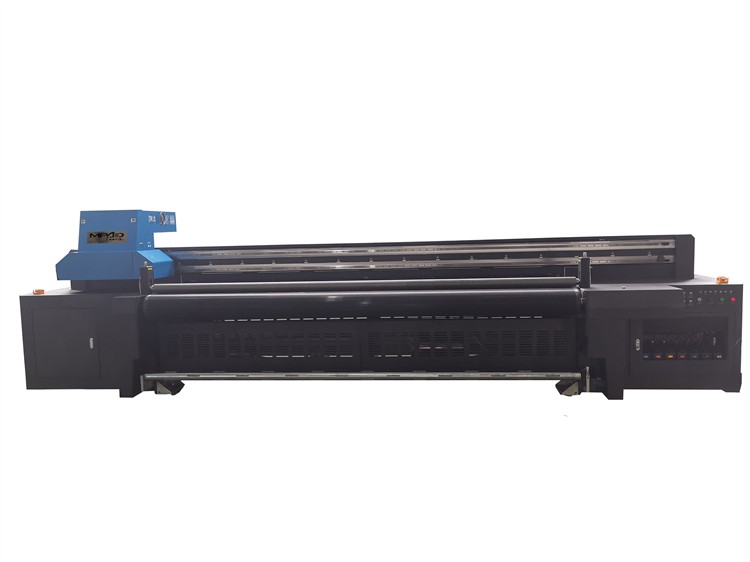
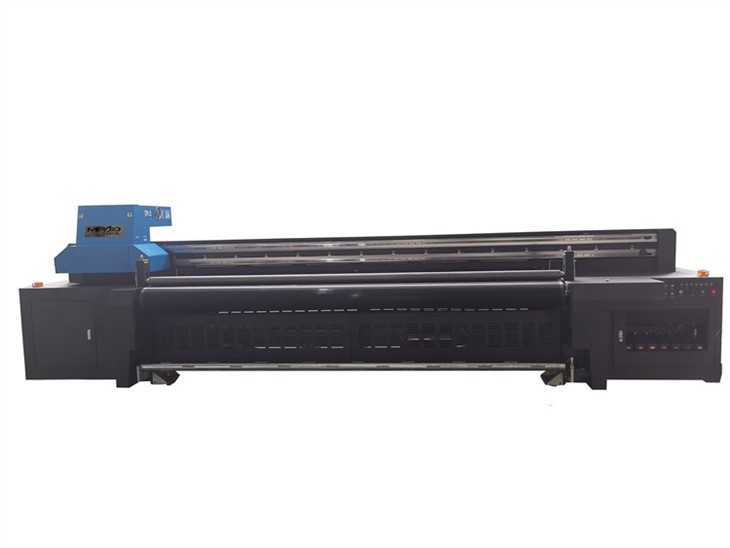
One of the primary factors that determine the printability of a UV hybrid printer is the material it can work with. UV hybrid printers are known for their ability to print on a wide range of substrates, including flat materials and roll - to - roll media. The UV Hybrid Printer Flatbed is designed to handle rigid materials such as wood, metal, glass, and plastic sheets. Meanwhile, the UV Flatbed Roll To Roll Printer can manage flexible materials like vinyl, fabric, and paper rolls.
However, not all materials are suitable for UV printing. Some materials may be too porous, causing the UV ink to soak in and resulting in a blurred or uneven print. For example, untreated concrete or certain types of rough - textured wood may pose challenges. On the other hand, some materials may be too smooth or non - porous, preventing the ink from adhering properly. Teflon, for instance, has a low surface energy, making it difficult for the UV ink to bond effectively. Additionally, materials that are sensitive to UV light or heat, such as some types of heat - sensitive plastics, may deform or discolor during the UV curing process.
Size and Thickness Constraints
The physical dimensions of the printing area and the maximum thickness of the substrate that a UV hybrid printer can accommodate are also limiting factors. Each printer model has a specific print area, which means that large - scale projects may require multiple prints or a more oversized printer. For example, if you need to print a single large - format graphic on a flat substrate, a printer with a small print area may not be able to complete the job in one go.
Similarly, the maximum thickness of the material that the printer can handle is restricted. Most UV hybrid printers have a specified maximum thickness, typically ranging from a few millimeters to several centimeters. If you have a very thick substrate, such as a thick block of wood or a thick metal plate, it may not fit within the printer's bed or may interfere with the printing mechanism.
Color and Print Quality
While UV hybrid printers are capable of producing high - quality prints with vibrant colors, there are still some limitations in terms of color accuracy and print resolution. The color gamut of a printer refers to the range of colors it can reproduce. Although modern UV hybrid printers have a wide color gamut, they may not be able to match every color in the real world. This can be a problem for industries that require precise color matching, such as graphic design and textile printing.
Print resolution is another important aspect of print quality. The resolution of a printer is measured in dots per inch (DPI). Higher DPI generally means better print quality, but there is a limit to how high the DPI can go on a UV hybrid printer. A very high - resolution print may also take a longer time to complete, reducing the printer's productivity. Additionally, the quality of the print can be affected by factors such as the type of ink, the condition of the print heads, and the surface of the substrate.
Complex Geometries and Shapes
UV hybrid printers are mainly designed for flat or relatively simple - shaped substrates. Printing on complex geometries, such as objects with deep curves, irregular surfaces, or undercuts, can be extremely challenging. The printer's print heads are typically designed to move in a linear or planar motion, which makes it difficult to conform to the contours of a complex - shaped object.
Even with the use of specialized fixtures and jigs, achieving a uniform and high - quality print on complex geometries can be a struggle. For example, printing on a spherical object or a three - dimensional sculpture would require a more advanced printing technology or a combination of different printing methods.
Production Speed
The production speed of a UV hybrid printer can also be a limitation, especially for large - scale production. While these printers are generally faster than traditional printing methods in many cases, the printing speed is still affected by factors such as the print resolution, the complexity of the design, and the type of substrate.
A high - resolution print with a lot of detail will take longer to complete than a low - resolution print. Similarly, printing on a rough or porous substrate may require multiple passes to achieve the desired print quality, which also slows down the production process. For industries that require high - volume, fast - turnaround printing, the production speed of a UV hybrid printer may not be sufficient.
Cost Considerations
Cost is another significant factor that can be considered a limitation. UV hybrid printers are relatively expensive compared to some other types of printers. The initial investment in purchasing a UV hybrid printer can be substantial, especially for high - end models with advanced features.
In addition to the purchase price, there are also ongoing costs associated with using a UV hybrid printer. These include the cost of UV ink, which is generally more expensive than traditional inks, and the cost of maintenance and replacement parts. The UV curing system also consumes a significant amount of energy, adding to the operational costs. For small businesses or startups with limited budgets, these costs may be prohibitive.
Conclusion
Despite these limitations, UV hybrid printers remain an excellent choice for a wide range of printing applications. Their versatility, high - quality output, and ability to print on various substrates make them a valuable asset in many industries. At UV Hybrid Printers, we are committed to providing our customers with the best - in - class UV hybrid printers and technical support.
If you're considering purchasing a UV hybrid printer for your business, it's important to carefully evaluate your printing needs and consider the limitations discussed in this blog. We understand that every customer has unique requirements, and our team of experts is here to help you choose the right printer model and provide solutions to overcome any potential challenges.
If you have any questions or would like to discuss your printing requirements in more detail, please feel free to reach out to us. We look forward to the opportunity to work with you and help you take your printing business to the next level.
References
- Smith, J. (2020). The Basics of UV Printing Technology. Printing Industry Journal, 15(2), 34 - 42.
- Johnson, A. (2021). Color Management in UV Hybrid Printing. Graphic Arts Magazine, 22(3), 56 - 63.
- Brown, C. (2019). Substrate Compatibility for UV Hybrid Printers. Industrial Printing Review, 18(4), 23 - 30.