

As a supplier of flatbed printers, I often encounter various inquiries from customers regarding the printing capabilities of our machines. One question that has recently piqued my interest is whether a flatbed printer can print on palladium. In this blog post, I will delve into this topic, exploring the technical aspects, challenges, and potential solutions to determine the feasibility of printing on palladium using a flatbed printer.
Understanding Palladium
Palladium is a rare and lustrous silvery - white metal belonging to the platinum group of elements. It has a wide range of applications, from jewelry making to catalytic converters in the automotive industry. Its physical properties, such as high melting point, good corrosion resistance, and malleability, make it a valuable material. However, these same properties also pose unique challenges when it comes to printing on its surface.
Flatbed Printer Technology
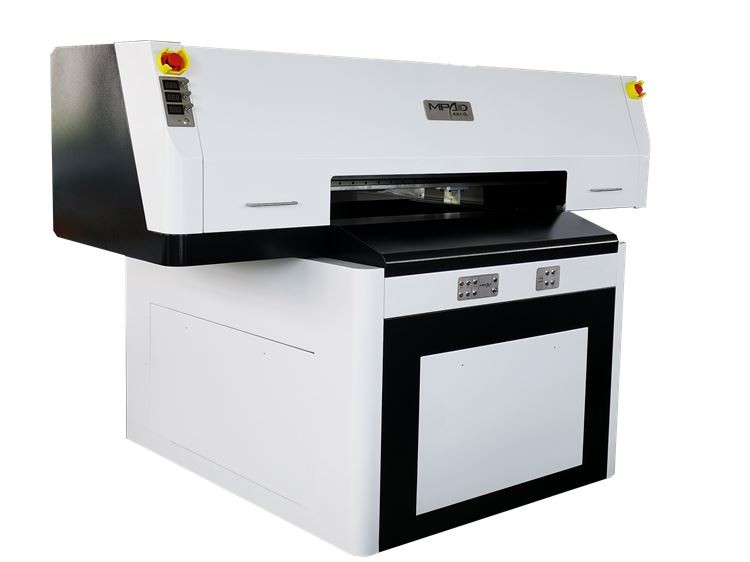
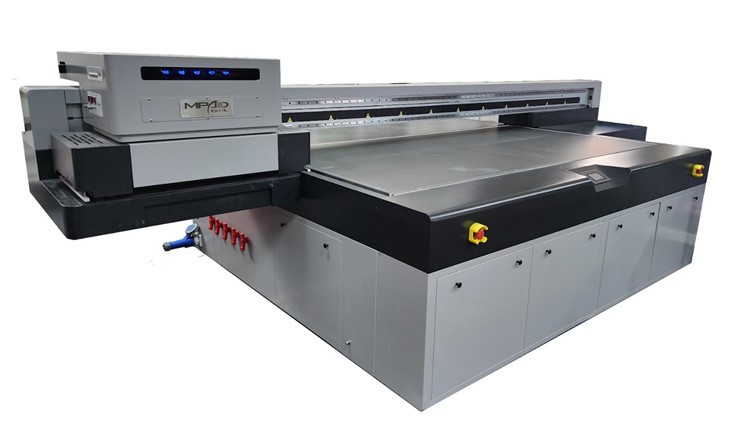
Flatbed printers are a type of digital printer that can print directly onto a flat surface. They use a variety of ink types, including UV - curable inks, which are cured instantly by ultraviolet light. This technology allows for high - resolution printing on a wide range of materials, from wood and glass to metal and plastic.
The working principle of a flatbed printer involves a print head that moves back and forth across the surface of the material, depositing tiny droplets of ink. The UV light then cures the ink, creating a durable and long - lasting print.
Can a Flatbed Printer Print on Palladium?
The short answer is yes, in theory, a flatbed printer can print on palladium. However, there are several factors that need to be considered to ensure successful printing.
Surface Preparation
Palladium has a very smooth and non - porous surface. For ink to adhere properly, the surface needs to be prepared. One common method is to use a primer. A primer creates a rough surface for the ink to bond to, improving adhesion. Additionally, the surface should be thoroughly cleaned to remove any contaminants, such as oils or dust, which could prevent proper ink adhesion.
Ink Compatibility
Selecting the right ink is crucial. UV - curable inks are a popular choice for flatbed printers due to their fast - curing properties and high durability. However, not all UV - curable inks are suitable for printing on palladium. The ink needs to be able to bond with the metal surface and withstand the physical and chemical properties of palladium. Some inks may react with the metal, causing discoloration or poor adhesion.
Printing Parameters
Adjusting the printing parameters is essential for achieving a high - quality print on palladium. This includes the print resolution, ink density, and the speed of the print head. A higher resolution will result in a more detailed print, but it may also require more ink and longer printing times. The ink density needs to be carefully calibrated to ensure proper coverage without over - saturating the surface.
Challenges and Solutions
Adhesion Issues
As mentioned earlier, adhesion is one of the main challenges when printing on palladium. To overcome this, as well as using a primer, some flatbed printers are equipped with a pre - treatment system that can enhance the surface energy of the metal, making it more receptive to the ink.
Heat Generation
During the UV - curing process, heat is generated. Palladium has a relatively high thermal conductivity, which means it can dissipate heat quickly. However, excessive heat can still cause problems, such as warping or discoloration of the metal. To address this, printers can be equipped with cooling systems to maintain a stable temperature during the printing process.
Applications of Printing on Palladium
Printing on palladium has several potential applications. In the jewelry industry, it can be used to add personalized designs, logos, or serial numbers to palladium jewelry. This allows for greater customization and value - addition to the products.
In the electronics industry, printing on palladium can be used for creating circuit patterns or labels on palladium - based components. The high - precision printing capabilities of flatbed printers make them suitable for these types of applications.
Our Flatbed Printer Offerings
At our company, we offer a range of UV Flatbed Printer Machine that are designed to handle various printing challenges. Our printers are equipped with advanced features, such as adjustable print heads, high - power UV lamps, and pre - treatment systems, which make them suitable for printing on palladium.
We also provide support in terms of ink selection and surface preparation. Our team of experts can assist you in determining the best printing parameters for your specific application.
If you are interested in printing on golf balls, we also have UV Printer Golf Balls and UV Printer Golf Balls solutions. These printers are specifically designed to print high - quality images on golf balls, offering a unique and personalized touch.
Conclusion
In conclusion, while there are challenges associated with printing on palladium using a flatbed printer, it is definitely achievable with the right equipment, ink, and techniques. Our flatbed printers, combined with our expertise in surface preparation and ink selection, can help you overcome these challenges and achieve high - quality prints on palladium.
If you are interested in exploring the possibilities of printing on palladium or other materials with our flatbed printers, we encourage you to contact us for a consultation. Our team is ready to assist you in finding the best printing solution for your needs. Whether you are in the jewelry, electronics, or any other industry, we can help you take your printing projects to the next level.
References
- "Metal Printing Technology: A Comprehensive Guide", Metal Printing Association, 2023
- "UV - Curable Inks: Properties and Applications", Ink Technology Journal, Vol. 15, 2022
- "Surface Preparation for Metal Printing", Surface Engineering Magazine, Issue 8, 2021