

As a supplier of flatbed printers, I often encounter various inquiries from customers about the capabilities of our machines. One question that has come up quite frequently is, "Can a flatbed printer print on titanium?" In this blog post, I'll delve into this topic, exploring the technical aspects, challenges, and possibilities of printing on titanium using flatbed printers.
Understanding Flatbed Printers
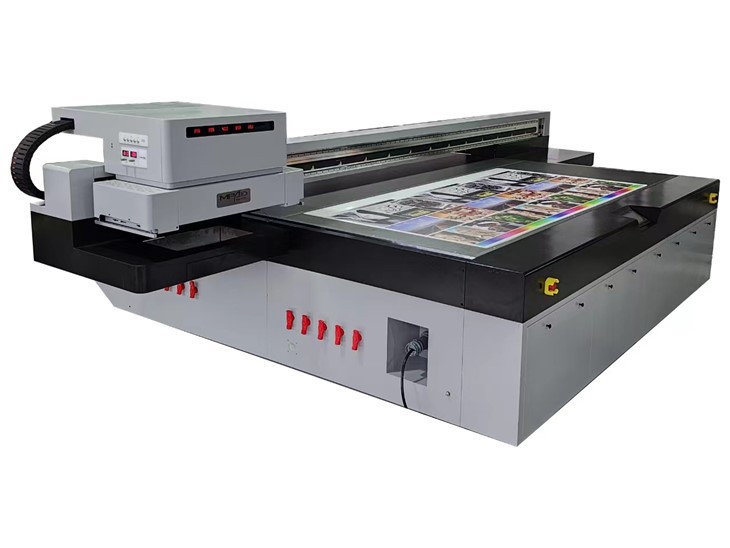
Before we discuss printing on titanium, let's first understand what flatbed printers are. Flatbed printers, such as the Digital Flatbed Printer, are versatile printing devices that can print directly onto a wide range of flat or slightly curved surfaces. Unlike traditional printers that use paper, flatbed printers can print on materials like wood, glass, acrylic, metal, and more.
These printers work by using ultraviolet (UV) ink, which is cured instantly by UV light as it is printed onto the surface. This process allows for high - quality, durable prints with sharp details and vibrant colors. The UV Flatbed Machine and UV Printer Machine are examples of flatbed printers that leverage UV technology for efficient and effective printing.
The Characteristics of Titanium
Titanium is a unique metal known for its high strength - to - weight ratio, corrosion resistance, and biocompatibility. It is widely used in various industries, including aerospace, medical, and jewelry. However, these properties also present challenges when it comes to printing on titanium.
One of the main challenges is the smooth and non - porous surface of titanium. Most inks rely on a certain degree of porosity to adhere properly to the surface. Since titanium is non - porous, the ink may not bond well, leading to poor print quality or the ink peeling off over time.
Another challenge is the hardness of titanium. Titanium is a very hard metal, which means that the printer's printhead needs to be able to handle the surface without getting damaged. Additionally, the high melting point of titanium makes it difficult to use heat - based printing methods.
Possibilities of Printing on Titanium with Flatbed Printers
Despite the challenges, it is indeed possible to print on titanium using flatbed printers. The key lies in proper surface preparation and the use of suitable inks.
Surface Preparation
Before printing, the titanium surface needs to be properly prepared to improve ink adhesion. One common method is to use sandblasting or chemical etching to create a micro - rough surface. Sandblasting involves using high - pressure air to propel abrasive particles at the titanium surface, creating tiny pits and grooves. Chemical etching, on the other hand, uses chemicals to dissolve a thin layer of the titanium surface, also creating a rougher texture.
Another option is to apply a primer to the titanium surface. A primer is a special coating that helps the ink adhere better to the metal. There are primers available specifically designed for use with UV inks on metal surfaces.
Suitable Inks
Not all UV inks are suitable for printing on titanium. The ink needs to have good adhesion properties and be able to withstand the unique characteristics of titanium. Some inks are formulated with special additives that enhance adhesion to non - porous surfaces. These inks are designed to form a strong bond with the titanium surface, ensuring that the print is durable and long - lasting.
When choosing an ink for printing on titanium, it's important to consider factors such as colorfastness, scratch resistance, and chemical resistance. The ink should be able to maintain its color and quality even when exposed to harsh environmental conditions or chemicals.
Applications of Printing on Titanium
Printing on titanium using flatbed printers opens up a wide range of applications.
Jewelry and Accessories
In the jewelry industry, flatbed printers can be used to print intricate designs, patterns, or personalized messages on titanium jewelry. This allows for greater customization and creativity, making each piece unique. For example, a customer could have their name or a special symbol printed on a titanium ring or pendant.
Aerospace and Automotive Industries
In the aerospace and automotive industries, printing on titanium can be used for part identification, branding, or decorative purposes. For instance, a manufacturer could print the part number, logo, or serial number on a titanium component, making it easier to identify and track.
Medical Devices
Titanium is commonly used in medical devices due to its biocompatibility. Printing on titanium medical devices can be used for labeling, such as printing the device's name, model number, or usage instructions. This helps to ensure proper identification and handling of the devices.
Considerations for Printing on Titanium
When considering printing on titanium using a flatbed printer, there are several factors to keep in mind.
Printer Settings
The printer settings need to be adjusted according to the characteristics of the titanium surface and the ink being used. This includes adjusting the print resolution, ink density, and curing time. A higher print resolution will result in a more detailed print, but it may also take longer to print. The ink density needs to be set correctly to ensure proper coverage and adhesion. The curing time is also crucial, as insufficient curing can lead to poor adhesion, while over - curing can damage the ink or the titanium surface.
Cost
Printing on titanium can be more expensive than printing on other materials. The cost of surface preparation, suitable inks, and the potential for longer printing times all contribute to the overall cost. However, the added value of customized and high - quality prints on titanium may justify the cost in certain applications.
Conclusion
In conclusion, while printing on titanium using a flatbed printer presents some challenges, it is definitely possible with the right surface preparation, suitable inks, and proper printer settings. As a flatbed printer supplier, we are committed to providing our customers with the knowledge and solutions to overcome these challenges and achieve high - quality prints on titanium.
If you are interested in exploring the possibilities of printing on titanium or other materials using our flatbed printers, we encourage you to contact us for a detailed discussion. Our team of experts is ready to assist you in finding the best printing solution for your specific needs. Whether you are in the jewelry, aerospace, automotive, or medical industry, we can help you bring your creative ideas to life with our advanced flatbed printing technology.
References
- "The Properties and Applications of Titanium" - Metallurgy Journal
- "UV Printing Technology: Principles and Applications" - Printing Industry Review
- "Surface Preparation Techniques for Metal Printing" - Surface Engineering Magazine