

In the realm of modern printing technology, single pass printers have emerged as a revolutionary force, offering unparalleled speed and efficiency. As a leading single pass printer supplier, I am often asked about how these remarkable machines handle halftones. Halftones are a fundamental aspect of printing, allowing for the representation of continuous - tone images, such as photographs, on surfaces that can only print in discrete dots. In this blog, I will delve into the intricacies of how single pass printers manage halftones, providing you with a comprehensive understanding of this critical process.
Understanding Halftones
Before we explore how single pass printers handle halftones, it is essential to understand what halftones are. In traditional printing, a continuous - tone image, like a photograph, consists of a wide range of colors and shades. However, printers can only apply ink in discrete dots. Halftoning is the technique of converting the continuous tones of an image into a pattern of dots of varying sizes or spacing. The human eye, from a distance, blends these dots together to perceive the illusion of continuous tones.
There are two main types of halftones: amplitude - modulated (AM) and frequency - modulated (FM). AM halftones use dots of different sizes arranged in a regular grid pattern. The larger the dot, the darker the perceived tone. FM halftones, on the other hand, use dots of a consistent size but vary their frequency or spacing. FM halftones are known for their smooth appearance and reduced moiré patterns, making them ideal for high - quality printing.
How Single Pass Printers Work
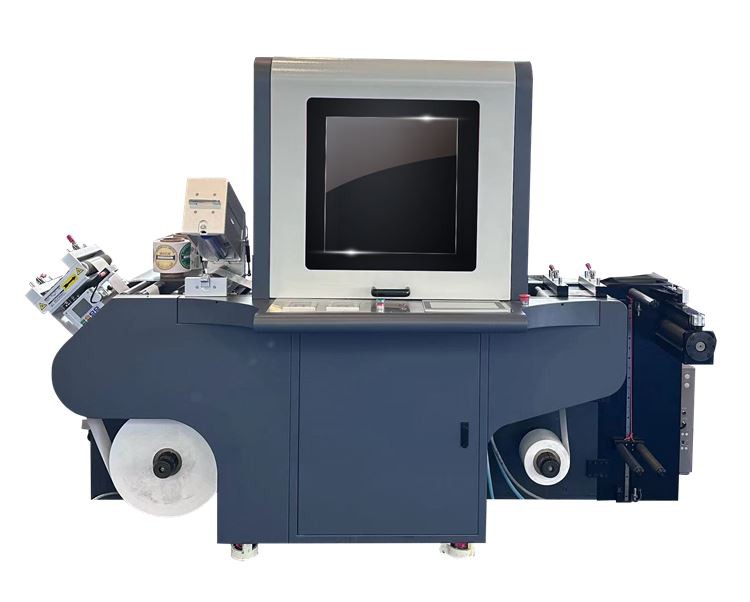
Single pass printers are designed to print an entire image in one pass, unlike traditional printers that may require multiple passes to build up the image. These printers use an array of printheads that span the width of the printing substrate. As the substrate moves past the printheads at high speed, the printheads eject ink droplets onto the surface, creating the image instantaneously.
The key advantage of single pass printers is their speed. They can produce high - volume prints in a fraction of the time compared to other printing methods. This makes them ideal for applications such as Digital Label Printer, Corrugated Board Printing Machine, and UV Label Printer.
Handling Halftones in Single Pass Printers
1. Advanced Printhead Technology
Single pass printers are equipped with state - of - the - art printhead technology that enables precise control of ink droplet placement. The printheads can eject tiny droplets of ink with high accuracy, allowing for the creation of fine halftone dots. For example, some printheads can produce droplets as small as a few picoliters, which is essential for creating sharp and detailed halftone images.
The ability to control the size and placement of ink droplets also allows single pass printers to handle both AM and FM halftones effectively. For AM halftones, the printheads can adjust the size of the droplets to create dots of different sizes. For FM halftones, the printheads can vary the frequency of droplet ejection to achieve the desired dot spacing.
2. High - Speed Data Processing
To handle halftones in a single pass, printers need to process a large amount of data quickly. Single pass printers are equipped with powerful data processing systems that can analyze the image data and convert it into a format that the printheads can understand. These systems can calculate the optimal dot pattern for the halftone image in real - time, ensuring that the image is printed accurately and efficiently.
The data processing systems also take into account factors such as the type of substrate, the ink used, and the printing speed. By adjusting the dot pattern based on these factors, single pass printers can produce high - quality halftone images on a variety of substrates, including paper, plastic, and cardboard.
3. Color Management
Color management is crucial for producing accurate halftone images. Single pass printers use sophisticated color management systems that can calibrate the colors of the ink to match the colors of the original image. These systems take into account the characteristics of the printheads, the ink, and the substrate to ensure that the colors are reproduced accurately.
The color management systems also allow for the adjustment of color saturation, contrast, and other parameters to enhance the visual appeal of the halftone image. By providing precise control over the color output, single pass printers can produce halftone images that are true to the original, even when printing on different substrates.
4. Substrate Compatibility
Single pass printers are capable of printing halftone images on a wide range of substrates. However, different substrates have different surface characteristics, which can affect the way the ink is absorbed and the quality of the halftone image. To ensure optimal results, single pass printers are designed to be compatible with a variety of substrates and can adjust the printing parameters accordingly.
For example, some substrates may require a higher ink density to achieve the desired color intensity, while others may require a lower ink density to prevent bleeding. Single pass printers can adjust the ink droplet size, frequency, and placement based on the substrate type to produce high - quality halftone images.
Applications of Halftone Printing with Single Pass Printers
1. Packaging Printing
In the packaging industry, halftone printing is used to create high - quality labels, cartons, and packaging materials. Single pass printers can produce detailed halftone images on a variety of packaging substrates, including paperboard, corrugated board, and plastic. This allows for the creation of eye - catching packaging designs that can help products stand out on the shelves.
2. Advertising and Promotion
Halftone printing is also widely used in advertising and promotion materials, such as posters, brochures, and flyers. Single pass printers can produce large - format halftone images quickly and efficiently, making them ideal for high - volume advertising campaigns. The ability to print high - quality halftone images on a variety of substrates also allows for the creation of unique and impactful advertising materials.
3. Textile Printing
In the textile industry, halftone printing is used to create patterns and designs on fabrics. Single pass printers can print halftone images on textiles at high speed, allowing for the mass production of printed fabrics. The ability to print accurate and detailed halftone images on textiles also allows for the creation of high - quality fashion and home decor products.
Conclusion
As a single pass printer supplier, I am proud to offer machines that are capable of handling halftones with exceptional precision and efficiency. The advanced technology incorporated into our single pass printers, including high - end printhead technology, powerful data processing systems, sophisticated color management, and substrate compatibility, enables us to produce high - quality halftone images for a wide range of applications.
Whether you are in the packaging, advertising, or textile industry, our single pass printers can help you achieve your printing goals. If you are interested in learning more about how our single pass printers can handle halftones for your specific application, I encourage you to contact us for a detailed discussion. We are committed to providing you with the best printing solutions and look forward to the opportunity to work with you.
References
- "Principles of Digital Printing" by John F. Hughes
- "Color Management in Printing" by R. W. G. Hunt
- "Inkjet Printing Technology" by Hiroyuki Suganuma