

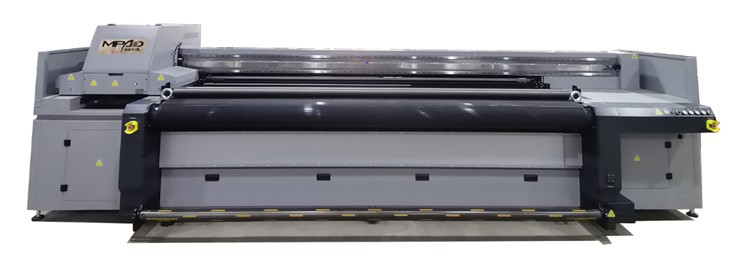
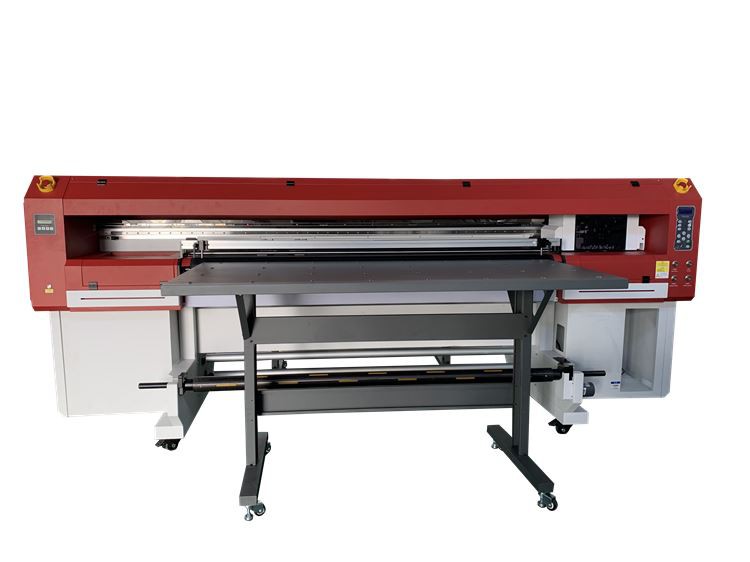
The scratch resistance of prints from a UV Hybrid Printer is a crucial factor that impacts the durability and quality of the final output. As a supplier of UV Hybrid Printers, I've had the opportunity to explore and understand this characteristic in-depth. In this blog, I'll discuss what scratch resistance means in the context of UV Hybrid Printer prints, the factors influencing it, and how it can benefit various applications.
Understanding Scratch Resistance
Scratch resistance refers to the ability of a printed surface to withstand abrasion and scratching without significant damage to the printed image or coating. In the case of prints from a UV Inkjet Printer, this is particularly important as these printers are often used for applications that require long - lasting and high - quality prints.
When a print has good scratch resistance, it can maintain its visual appeal and integrity even when exposed to normal wear and tear. For example, in signage applications, the print may be rubbed against by people, vehicles, or environmental elements. A scratch - resistant print will not lose its color or clarity easily, ensuring that the message remains visible and professional.
Factors Affecting Scratch Resistance
1. UV Ink Quality
The quality of the UV ink used in the Hybrid Printer plays a fundamental role in determining scratch resistance. High - quality UV inks are formulated with special polymers and resins that form a hard and durable layer when cured. These inks are designed to adhere well to the substrate and resist abrasion.
For instance, some premium UV inks contain additives that enhance their scratch - resistant properties. These additives can create a more elastic and tough surface, which is less likely to be scratched by sharp objects. Additionally, the curing process of the UV ink is critical. When the ink is properly cured by the UV lamps in the printer, it forms a strong bond with the substrate, increasing its scratch resistance.
2. Substrate Selection
The type of substrate used also has a significant impact on scratch resistance. Different materials have different surface characteristics and levels of hardness. For example, printing on a hard plastic substrate like acrylic or polycarbonate generally results in more scratch - resistant prints compared to printing on a soft paper or fabric.
Hard substrates provide a more stable surface for the ink to adhere to, and they are less likely to deform under pressure. This means that the printed image is better protected from scratches. On the other hand, if the substrate is too porous, the ink may be absorbed too deeply, which can reduce the surface hardness and scratch resistance.
3. Printing Process Parameters
The settings of the Hybrid Flatbed Printers during the printing process can affect scratch resistance. Factors such as print resolution, ink density, and curing intensity all play a role.
A higher print resolution generally results in a more detailed and uniform print, which can contribute to better scratch resistance. When the ink is applied evenly at a high resolution, it forms a more consistent layer on the substrate. Ink density also matters; if the ink is too thin, it may not provide enough protection against scratches. However, if it's too thick, it can lead to cracking or peeling, which also reduces scratch resistance.
The curing intensity of the UV lamps is another critical parameter. If the lamps are not powerful enough, the ink may not be fully cured, resulting in a soft and easily scratched surface. Conversely, over - curing can also damage the ink and substrate, reducing the overall scratch resistance.
Benefits of Scratch - Resistant Prints
1. Long - Term Durability
One of the most significant benefits of scratch - resistant prints is their long - term durability. In applications such as outdoor signage, vehicle wraps, and industrial labeling, prints need to withstand harsh environmental conditions and physical contact. Scratch - resistant prints can last for years without significant degradation, reducing the need for frequent replacements.
This durability not only saves money in the long run but also ensures that the brand image or message conveyed by the print remains consistent over time. For example, a company's logo on an outdoor sign will look as good after several years if the print is scratch - resistant, maintaining brand recognition and professionalism.
2. Enhanced Aesthetics
Scratch - resistant prints maintain their original appearance for a longer period. They do not develop unsightly scratches or scuffs that can detract from the overall visual appeal. This is especially important in applications where the print is a key part of the product's aesthetic, such as in consumer electronics, packaging, and interior design.
A scratch - free print gives a high - end and professional look, which can increase the perceived value of the product. For example, a beautifully printed smartphone case with scratch - resistant ink will look more attractive to consumers compared to a case with easily scratched prints.
3. Versatility in Applications
The scratch resistance of prints from a UV Hybrid Printer allows for a wide range of applications. These printers can be used to print on various substrates, and the scratch - resistant prints can be used in different environments. From indoor wall murals to outdoor billboards, and from promotional items to industrial components, the versatility of scratch - resistant prints makes UV Hybrid Printers a valuable investment for businesses.
Testing Scratch Resistance
To ensure the quality of the prints in terms of scratch resistance, various testing methods can be used. One common method is the Taber Abrasion Test. In this test, a rotating abrasive wheel is applied to the printed surface under a specified load, and the amount of wear and damage is measured after a certain number of rotations.
Another method is the Pencil Hardness Test. In this test, pencils of different hardness levels are used to scratch the printed surface at a specific angle and pressure. The hardness of the pencil that first scratches the surface indicates the scratch resistance of the print.
Improving Scratch Resistance
As a supplier, we offer several solutions to improve the scratch resistance of prints from our UV Hybrid Printers. We provide high - quality UV inks that are specifically formulated for excellent scratch resistance. Our technical support team can also assist customers in selecting the most suitable substrate for their application, taking into account factors such as hardness, porosity, and compatibility with the ink.
In addition, we offer training on optimizing the printing process parameters to ensure proper ink curing and application. By adjusting the print resolution, ink density, and curing intensity, customers can achieve the best possible scratch - resistant prints.
Conclusion
The scratch resistance of prints from a UV Hybrid Printer is a complex but important characteristic. It is influenced by factors such as ink quality, substrate selection, and printing process parameters. Scratch - resistant prints offer numerous benefits, including long - term durability, enhanced aesthetics, and versatility in applications.
If you are interested in learning more about our UV Hybrid Printers and how they can produce scratch - resistant prints for your specific needs, please feel free to contact us for a detailed discussion and to start the procurement process. We are committed to providing you with the best printing solutions and support to meet your requirements.
References
- "UV Printing Technology: Principles and Applications" by John Smith
- "Materials Science for Printing Processes" by Emily Brown
- Industry reports on UV Hybrid Printer performance and print durability.