

As a supplier of Single Pass Printers, I often encounter questions from clients regarding the processing power of a Single Pass Printer's controller. Understanding this aspect is crucial as it directly impacts the printer's performance, efficiency, and the quality of the printed output. In this blog, I'll delve into the concept of processing power in Single Pass Printer controllers, its significance, and how it affects various printing operations.
What is a Single Pass Printer?
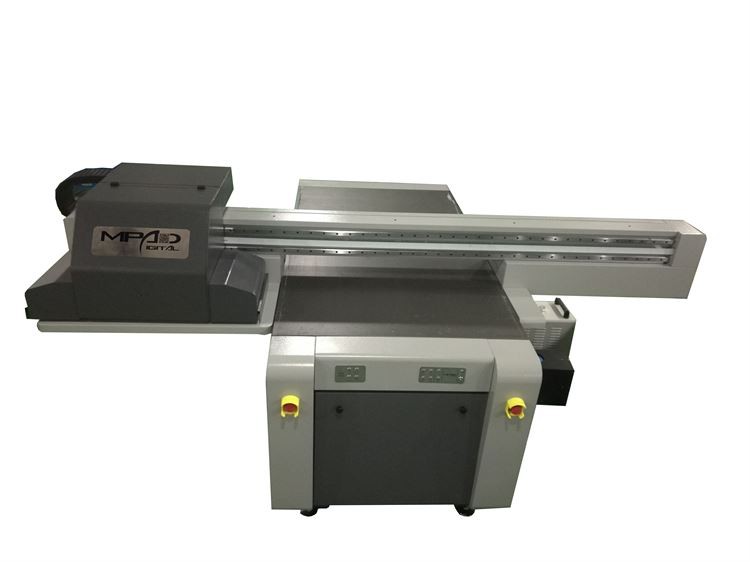
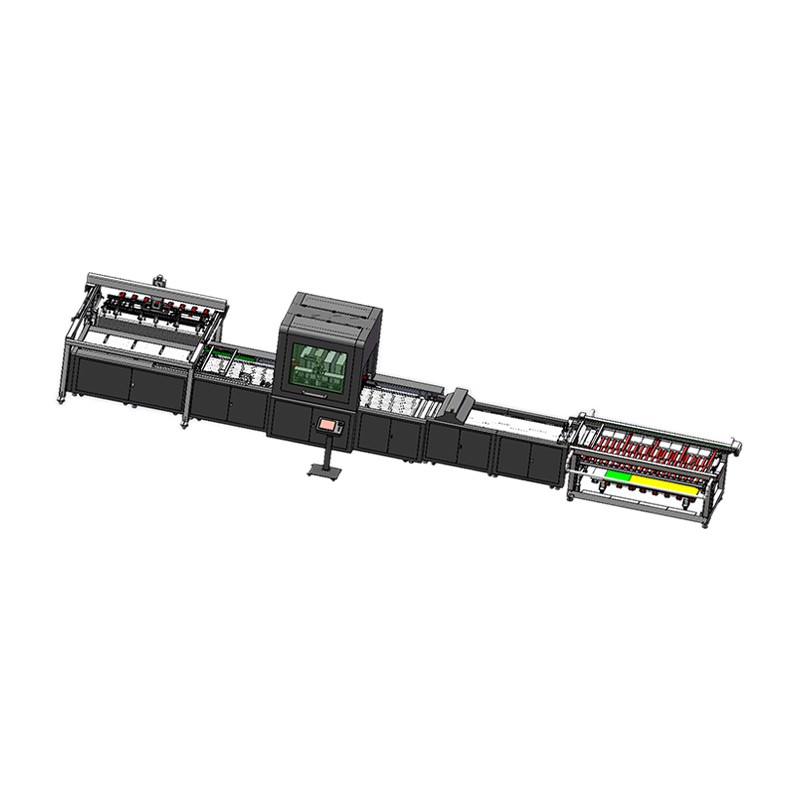
Before we explore the processing power of its controller, let's briefly understand what a Single Pass Printer is. A Single Pass Printer is a high - speed printing device that can print an entire image or text in one pass over the printing substrate. This is in contrast to traditional printers that may require multiple passes to complete a print job. Single Pass Printers are commonly used in industrial applications, such as Carton Printing Machine and One Pass UV Printer, where high - volume and high - speed printing are essential.
The Role of the Controller in a Single Pass Printer
The controller in a Single Pass Printer acts as the brain of the machine. It manages and coordinates all the functions of the printer, including inkjet firing, media movement, color management, and data transfer. The controller receives the digital print data from a computer or other data source, processes it, and then sends the appropriate signals to the print heads and other components of the printer to create the desired print.
Understanding Processing Power
Processing power refers to the ability of the controller to handle and manipulate data quickly and efficiently. It is typically measured in terms of clock speed (measured in gigahertz, GHz), the number of processing cores, and the amount of random - access memory (RAM).
Clock Speed
The clock speed of a controller determines how many instructions it can execute per second. A higher clock speed means that the controller can process data faster. For example, a controller with a clock speed of 3.0 GHz can execute 3 billion instructions per second. In the context of a Single Pass Printer, a higher clock speed allows the controller to process the print data in real - time, ensuring that the print heads can fire the ink droplets at the right time and in the right place, resulting in high - quality prints.
Number of Processing Cores
Modern controllers often have multiple processing cores. Each core can handle a separate set of instructions simultaneously. For instance, a quad - core controller has four processing cores, which means it can perform four different tasks at the same time. In a Single Pass Printer, multiple cores can be used to parallelize the data processing tasks. One core might be responsible for color management, another for inkjet firing control, and so on. This parallel processing significantly improves the overall processing power of the controller and the printing speed of the machine.
Random - Access Memory (RAM)
RAM is used by the controller to store the data that it is currently processing. A larger amount of RAM allows the controller to hold more print data at once, reducing the need to constantly access the slower storage devices. In a Single Pass Printer, sufficient RAM is essential for handling large print jobs, especially those with high - resolution images or complex color patterns. If the controller runs out of RAM, it may have to swap data between the RAM and the storage device, which can slow down the printing process.
Impact of Processing Power on Printing Performance
Printing Speed
The processing power of the controller has a direct impact on the printing speed of a Single Pass Printer. A more powerful controller can process the print data faster, allowing the printer to print at a higher speed. For example, in a Carton Printing Machine, a high - performance controller can enable the machine to print hundreds of cartons per minute, increasing the overall productivity of the printing operation.
Print Quality
Processing power also affects the print quality. A controller with sufficient processing power can accurately manage the color and ink droplet placement. It can perform complex color correction algorithms in real - time, ensuring that the printed colors match the original digital image as closely as possible. Additionally, a powerful controller can control the inkjet firing with high precision, resulting in sharp and clear prints with minimal banding or other printing artifacts.
Compatibility with Different Print Media
Different print media, such as paper, cardboard, plastic, and metal, require different printing parameters. A controller with high processing power can quickly adapt to these different media types. It can adjust the ink flow, firing frequency, and other parameters to ensure optimal printing results on various substrates.
Factors Affecting the Required Processing Power
Print Resolution
Higher print resolutions require more data to be processed. For example, a print job with a resolution of 1200 x 1200 dots per inch (dpi) will generate significantly more data than a job with a resolution of 300 x 300 dpi. To handle high - resolution prints, the controller needs to have sufficient processing power to process all the data in a timely manner.
Color Depth
Color depth refers to the number of colors that can be represented in a print. A higher color depth, such as 24 - bit color (which can represent over 16 million colors), requires more data to be processed compared to a lower color depth, such as 8 - bit color (which can represent 256 colors). The controller must be able to handle the increased data volume associated with higher color depths to produce accurate and vibrant prints.
Print Width
The wider the print width, the more print heads are required, and the more data needs to be processed. A Single Pass Printer with a wide print width, such as a large - format Carton Printing Machine, will need a controller with high processing power to manage all the print heads and ensure uniform printing across the entire width.
Conclusion
The processing power of a Single Pass Printer's controller is a critical factor that determines the performance, speed, and quality of the printing. A controller with high processing power, in terms of clock speed, number of cores, and RAM, can handle complex print jobs, adapt to different print media, and ensure high - speed and high - quality printing.
If you are in the market for a Single Pass Printer and want to learn more about how the processing power of the controller can meet your specific printing needs, we are here to help. Our team of experts can provide you with detailed information and guidance on choosing the right printer for your business. Contact us to start a discussion about your printing requirements and explore the possibilities of our Single Pass Printers.
References
- "Industrial Inkjet Printing Technology" by X. Dong and X. Zhang
- "Principles of Digital Printing" by P. Feller and D. Kipphan