
Hey there! As a supplier of UV flatbed printers, I often get asked a bunch of interesting questions about what these machines can and can't do. One question that's been popping up quite a bit lately is, "Can a UV flatbed printer print on carbon fiber?" Well, let's dive right into it and find out.
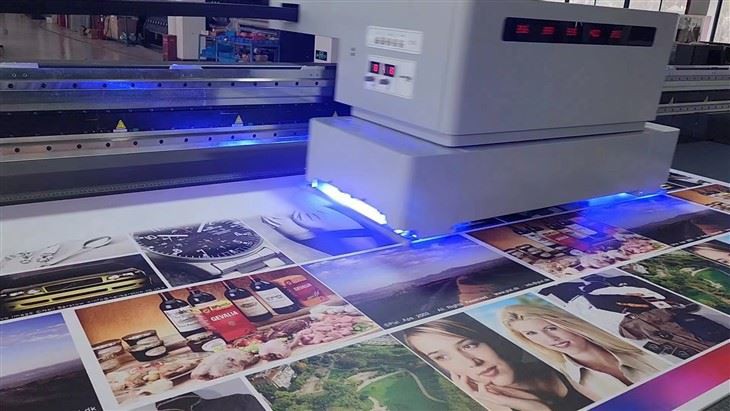
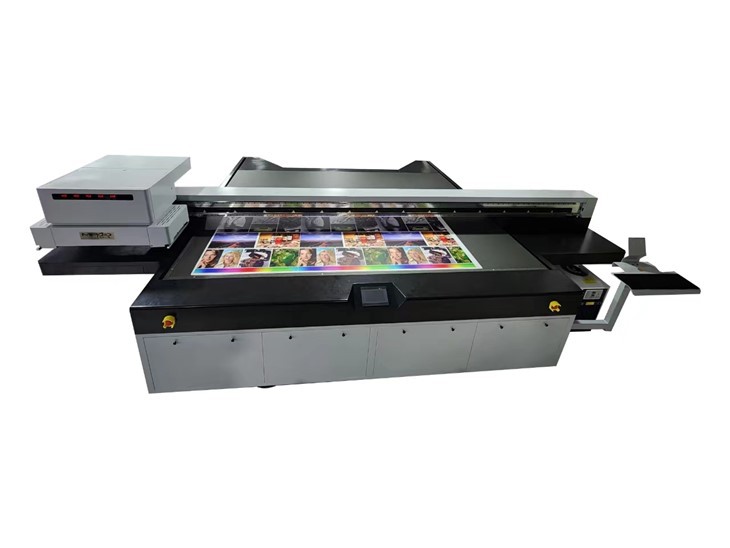
First off, let's quickly go over what a UV flatbed printer is. A Flatbed Digital Printer is a pretty cool piece of tech. It's designed to print directly onto a wide variety of flat surfaces. Unlike traditional printers that might need special paper or materials, a UV flatbed printer can handle all sorts of stuff, from wood and glass to metal and plastics. The "UV" part stands for ultraviolet, and it's important because the printer uses UV-curable inks. These inks dry almost instantly when exposed to UV light, which means you get a sharp, durable print right away.
Now, let's talk about carbon fiber. Carbon fiber is a super-strong, lightweight material that's used in all kinds of high-performance applications. You'll find it in things like sports equipment, aerospace parts, and high-end cars. It's made up of extremely thin strands of carbon atoms that are woven together to create a fabric-like material. Then, this fabric is usually combined with a resin to make it rigid and form it into the desired shape.
So, can a UV flatbed printer print on carbon fiber? The short answer is yes, but there are a few things you need to keep in mind.
Surface Preparation
The surface of carbon fiber can be a bit tricky. It's smooth and often has a protective coating or finish. Before you start printing, you need to make sure the surface is clean and free of any dust, grease, or fingerprints. A good way to do this is to use a mild solvent or isopropyl alcohol to wipe down the carbon fiber. This will help the ink adhere better to the surface.
Ink Compatibility
Not all UV inks are created equal. When printing on carbon fiber, you need to use inks that are specifically formulated to bond well with this type of material. Some inks might not adhere properly, which could result in a print that looks patchy or peels off easily. As a supplier, I always recommend testing a small area first with different inks to see which one works best.
Adhesion Promoters
In some cases, you might need to use an adhesion promoter. This is a special chemical that you apply to the carbon fiber surface before printing. It helps the ink stick better and creates a more durable bond. There are different types of adhesion promoters available, so make sure to choose one that's suitable for carbon fiber.
Printer Settings
Getting the right printer settings is crucial. You need to adjust the printhead height, the ink density, and the curing time to ensure a high-quality print. If the printhead is too close to the surface, it could damage the carbon fiber. On the other hand, if it's too far away, the print might be blurry. The ink density needs to be just right so that the colors are vibrant but not too thick. And the curing time should be long enough to fully dry the ink but not so long that it overheats the carbon fiber.
Applications of Printing on Carbon Fiber
There are some really cool applications for printing on carbon fiber. For example, in the sports industry, you could print custom logos or designs on carbon fiber golf clubs or bike frames. Check out our UV Printer Golf Balls page to see what kind of amazing prints can be achieved. In the automotive world, you could add unique graphics or branding to carbon fiber interior panels or exterior parts. And in the aerospace field, printing on carbon fiber components can help with identification and labeling.
Our UV 6090 Printer
One of the printers we offer that's great for printing on carbon fiber is the UV 6090 Printer. It has a large printing area, which is perfect for handling bigger carbon fiber pieces. It also has advanced printhead technology that allows for precise control over the ink deposition. This means you can get really detailed and high-resolution prints. Plus, it's equipped with a powerful UV curing system that ensures the ink dries quickly and adheres well to the surface.
Tips for Success
- Test, test, test: Always do a test print on a small, inconspicuous area of the carbon fiber first. This will help you fine-tune the printer settings and make sure the ink adheres properly.
- Use high-quality materials: Invest in good-quality UV inks and adhesion promoters. It might cost a bit more upfront, but it will save you a lot of headaches in the long run.
- Follow the manufacturer's instructions: Make sure you read and follow the instructions for both the printer and the inks. This will help you get the best results and avoid any potential problems.
Conclusion
So, to sum it up, a UV flatbed printer can definitely print on carbon fiber, but it requires some careful preparation and the right settings. With the right approach, you can create some really amazing and durable prints on this high-performance material.
If you're interested in learning more about our UV flatbed printers or have any questions about printing on carbon fiber, don't hesitate to reach out. We're here to help you with all your printing needs and can guide you through the process to ensure you get the best results. Whether you're a small business looking to add some custom branding to your products or a large manufacturer in need of high-volume printing, we've got the solutions for you. Contact us today to start a conversation about your printing requirements and let's see how we can work together to bring your ideas to life.
References
- "UV Printing Technology: Principles and Applications" - A comprehensive guide on UV printing technology and its various applications.
- "Carbon Fiber: Properties and Manufacturing" - An in - depth look at the properties of carbon fiber and how it's manufactured.